Cover Letter Samples for Administrative Assistants
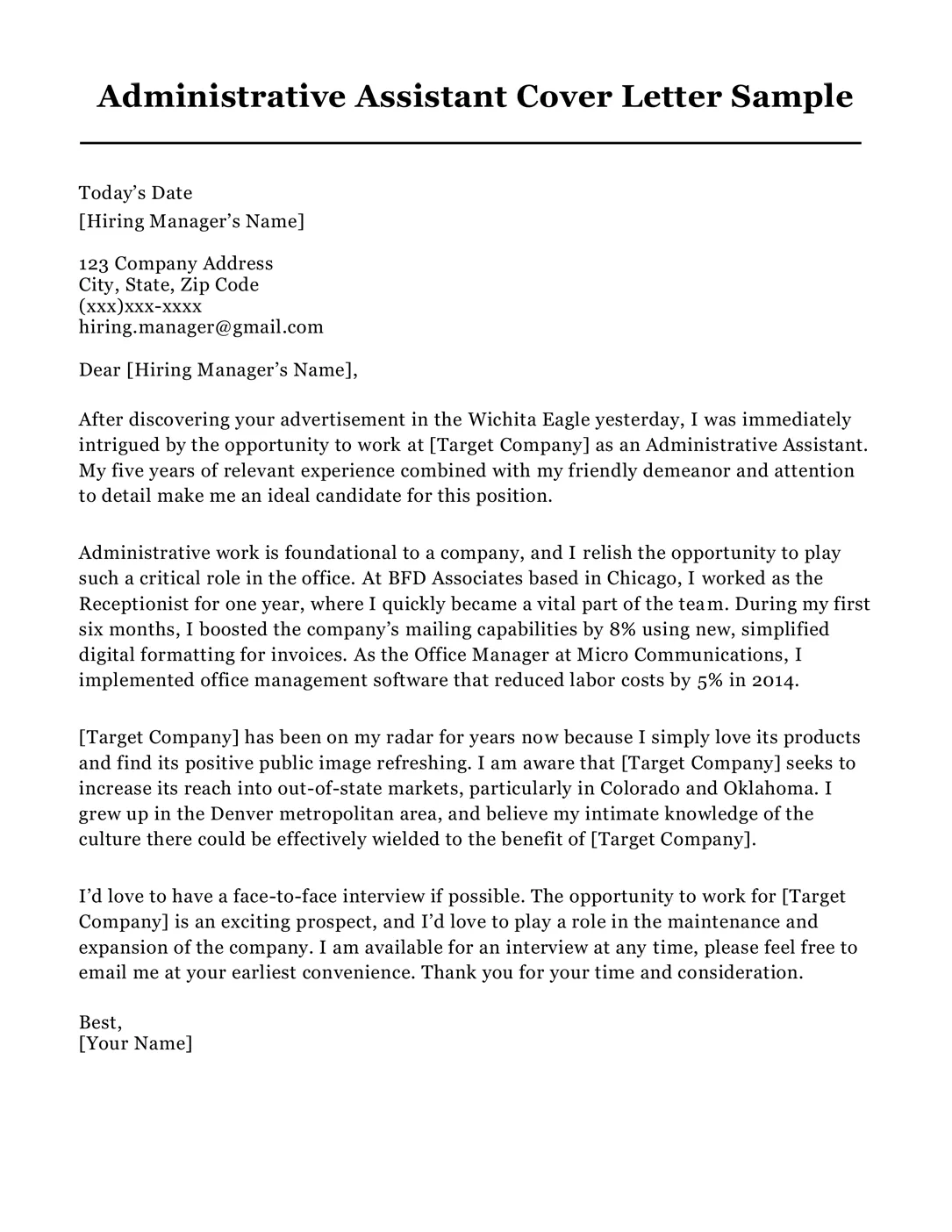
Crafting a compelling cover letter is crucial for administrative assistants seeking employment. This document serves as your initial introduction, allowing you to showcase your skills, experience, and personality. A well-written cover letter can significantly increase your chances of securing an interview. This article provides valuable insights and actionable tips, including cover letter samples for administrative assistant positions. We will explore various elements, including highlighting your skills, tailoring your letter, and incorporating a strong call to action. By following these guidelines, you can create a standout cover letter that captures the attention of potential employers and helps you land your dream job. Remember, your cover letter is your first impression – make it count!
Highlighting Your Skills and Experience
Your cover letter should effectively highlight your relevant skills and experience. Begin by identifying the key requirements of the administrative assistant role you are applying for. Then, use your cover letter to demonstrate how your qualifications align with these needs. This involves providing specific examples of how you have successfully performed similar tasks in the past. When highlighting your experience, be sure to quantify your achievements whenever possible. Instead of simply stating that you managed a team, mention how you improved efficiency or reduced costs. The goal is to prove to the hiring manager that you can make an impact in the role, not just list responsibilities. Use action verbs to describe your duties and accomplishments, making your experience more dynamic and engaging.
Showcasing Relevant Skills

Administrative assistants need a diverse set of skills. Emphasize the skills that are most relevant to the job. Common skills include excellent communication (both written and verbal), strong organizational abilities, proficiency in office software (like Microsoft Office Suite, Google Workspace), and the ability to multitask. Detail your experience with scheduling, managing calendars, handling correspondence, and providing customer service. If you possess specialized skills such as bookkeeping, social media management, or experience with specific industry software, highlight them. Customize your list of skills to match the specific job description, ensuring that the most important requirements are at the forefront. This targeted approach shows that you understand what the employer is looking for.
Quantifying Achievements
Quantifying your achievements adds significant value to your cover letter. Instead of general statements, use numbers and statistics to demonstrate your impact. For example, rather than stating ‘Improved office efficiency,’ you could say ‘Improved office efficiency by 15% through the implementation of a new filing system.’ Did you reduce costs, increase productivity, or improve customer satisfaction? Include these metrics. Quantifying your achievements not only provides concrete evidence of your skills but also makes your accomplishments more memorable and persuasive. Consider how your actions have benefited previous employers, and use those results to demonstrate your potential value to the prospective employer. Adding numbers provides credibility and helps you stand out.
Tailoring Your Cover Letter
One of the most critical aspects of writing an effective cover letter is tailoring it to each job application. Generic cover letters are easily recognizable and often discarded. Take the time to review the job description carefully. Then, customize your letter to address the specific requirements and keywords outlined by the employer. This shows that you have invested time and effort in understanding their needs. Mention the company’s name and demonstrate that you have researched their business, values, and recent projects. Showing that you understand their mission and how your skills align with their goals significantly increases your chances of getting an interview. Always avoid using templates without modifications, and ensure that your cover letter reflects your unique qualifications and genuine interest in the role.
Researching the Company

Before you start writing, dedicate time to researching the company. Visit their website, read their ‘About Us’ page, and explore their social media profiles. This research will provide you with insights into their culture, values, and current projects. Use this information to customize your cover letter and demonstrate your genuine interest in the company. Mention specific aspects of their work that appeal to you or how your skills can contribute to their goals. Understanding the company’s mission and values will help you align your cover letter to their specific needs. This level of personalization shows initiative and a genuine desire to become part of their team, setting you apart from candidates who submit generic applications. Tailoring your letter shows you understand the business.
Addressing Specific Requirements
The job description is your guide. Pay close attention to the requirements listed. Identify the key qualifications, skills, and experiences the employer is looking for. Address each of these requirements directly in your cover letter. Provide specific examples of how your skills and experiences align with the role’s demands. If the job requires proficiency in a particular software, highlight your experience with it. If it emphasizes organizational skills, provide an example of a complex project you managed successfully. Ensure that your cover letter reads as a direct response to the job description. Demonstrating that you possess the necessary qualifications significantly increases your chances of moving to the next step in the hiring process.
Formatting and Presentation
The formatting and presentation of your cover letter are as important as its content. A well-formatted letter demonstrates professionalism and attention to detail. Use a clean, easy-to-read font such as Times New Roman, Arial, or Calibri, and maintain consistent formatting throughout the document. Use standard margins (1 inch on all sides) and single-space the body of the letter. Keep the tone professional and use business letter format, including your contact information, the date, the hiring manager’s name (if known), and the company’s address. Break up long paragraphs to improve readability. The goal is to create a polished document that is visually appealing and easy to read. A well-formatted letter shows you pay attention to detail and value the hiring manager’s time.
Choosing the Right Tone

The tone of your cover letter should be professional and enthusiastic. While it’s essential to maintain a formal tone, it is equally important to express your genuine interest in the role and the company. Avoid overly casual language or slang. Instead, use clear and concise language to showcase your skills and experience. Convey your excitement about the opportunity and demonstrate how your skills align with the company’s needs. Use positive language, such as stating your enthusiasm for the position and mentioning your confidence in contributing to the company’s success. Balance formality with genuine enthusiasm to create a compelling impression. Strike the right balance between professionalism and personality to resonate with the hiring manager. The overall tone should convey your interest in the job.
Proofreading and Editing
Proofreading and editing are critical steps that should not be overlooked. Typos, grammatical errors, and inconsistencies can significantly detract from the overall impact of your cover letter. Before submitting your application, carefully proofread your cover letter for any mistakes. Check for grammatical errors, spelling mistakes, and punctuation errors. Review the formatting to ensure consistency. Read your cover letter aloud, as this can help you catch errors that you might miss when reading silently. Consider asking a friend, family member, or career advisor to review your letter for feedback. A fresh pair of eyes can often spot mistakes that you might overlook. A well-proofread and error-free cover letter demonstrates your attention to detail and professionalism. Proofreading shows you care about quality and are detail oriented.
Actionable Tips for a Strong Cover Letter
Beyond specific skills and formatting, there are several general tips to enhance your cover letter. Keep it concise, aiming for no more than one page. Focus on the most relevant information and avoid unnecessary details. Highlight your accomplishments and quantify them whenever possible. Use action verbs to describe your duties and achievements, making your experience more dynamic and engaging. Tailor each cover letter to the specific job description and company. Personalize the letter by addressing the hiring manager by name (if possible) and mentioning the company’s name throughout. By following these actionable tips, you can significantly improve the effectiveness of your cover letter and increase your chances of landing an interview. These tips, when implemented, will help you write a strong cover letter.
Emphasizing Your Value Proposition

In your cover letter, it is essential to clearly communicate your value proposition. This means articulating what you bring to the table and how you can contribute to the company’s success. Think about your unique skills, experiences, and strengths, and how they align with the needs of the employer. Provide specific examples of how you have excelled in previous roles and how you can replicate that success in the new position. Highlight your ability to solve problems, improve processes, or contribute to a positive work environment. Your cover letter must show that you are not just seeking a job but that you are a valuable asset who can make a difference. Clearly defining your value proposition will make you a more compelling candidate.
Demonstrating Enthusiasm and Interest
Expressing genuine enthusiasm and interest in the position and company can make a big difference. The hiring manager wants to see that you are excited about the opportunity. Show your interest by mentioning the specific aspects of the job that appeal to you. Reference the company’s values or recent projects that resonate with you. This demonstrates that you have researched the company and are genuinely interested in being a part of their team. Avoid generic statements. Use phrases like ‘I am excited about the opportunity to…’ or ‘I am particularly drawn to…’ to show your genuine interest. Tailor the letter to show specific enthusiasm. Demonstrating that you want the job will help you get the job.
Including a Call to Action
Conclude your cover letter with a strong call to action. Let the hiring manager know what you want them to do next. For instance, you can express your eagerness to discuss your qualifications further and request an interview. Make it clear that you are available and ready to provide any additional information they may need. Include your contact information, such as your phone number and email address, making it easy for the hiring manager to reach you. A clear call to action signals your initiative and enthusiasm for the role. Avoid leaving the reader with an open-ended conclusion; instead, provide a direct and actionable closing statement. A solid call to action encourages a response from the hiring manager, significantly increasing your chances of moving forward in the hiring process.