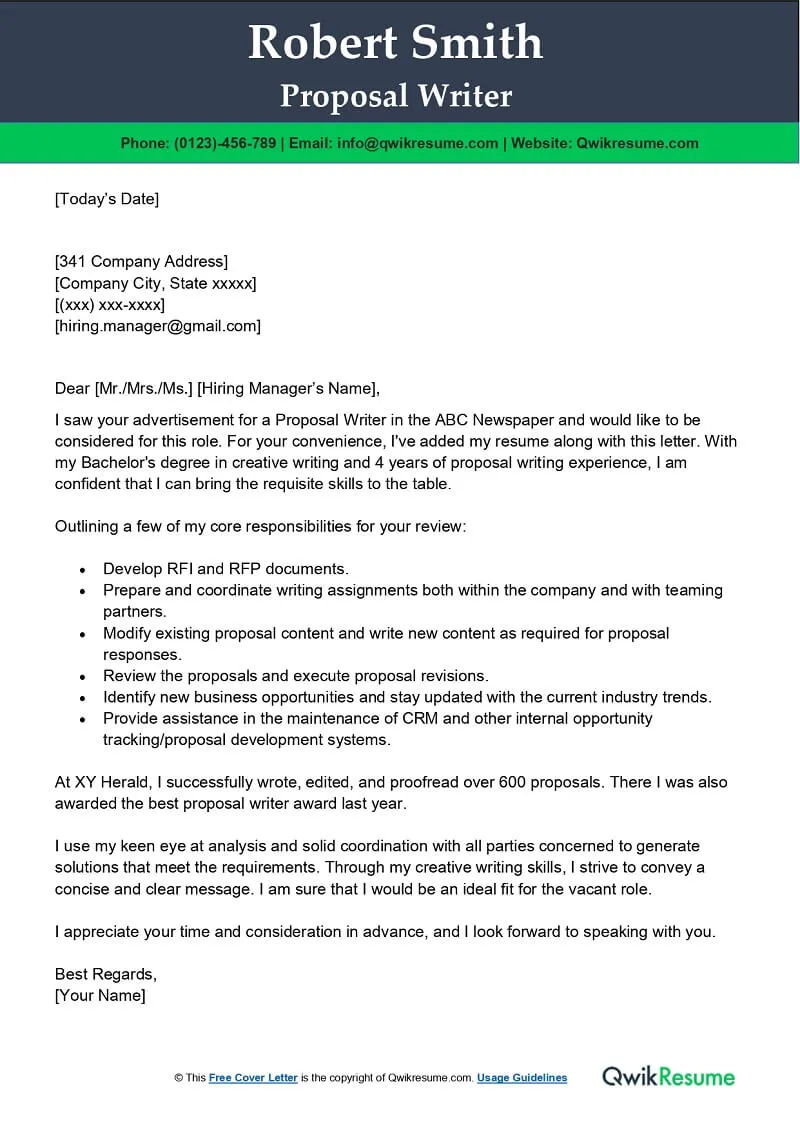
Crafting a Compelling Cover Letter
A cover letter is more than just a formality; it is your first opportunity to make a strong impression and persuade the recipient to consider your bid proposal. It serves as a crucial introduction, setting the tone for your entire proposal. A well-crafted cover letter should concisely and persuasively communicate your understanding of the project’s requirements and your ability to meet them, ultimately convincing the recipient to read your proposal with interest. The goal is to capture their attention immediately and encourage them to delve into the details of your bid. It must be tailored for each specific opportunity.
Understanding the Bid Proposal’s Purpose
Before you even begin writing, fully understand the purpose of your bid proposal. What problem are you solving? What are the specific needs of the client? What are their priorities? A clear understanding will help you tailor your cover letter and the proposal itself to directly address these points. Thoroughly review the request for proposal (RFP) or any other guidelines provided by the potential client. Identify the key objectives and requirements outlined in the document. This will inform the structure and content of your cover letter, ensuring you highlight relevant experience and solutions. Understanding the bid proposal purpose will guide the rest of the process.
Highlighting Key Objectives

In your cover letter, briefly mention the main objectives of the project as you understand them. Show the client that you have read and understood their requirements. Briefly mention how your company or services directly addresses these objectives, setting the stage for your proposal’s detailed explanation. Focus on how you will deliver value and help them achieve their desired outcomes. This early emphasis on key objectives demonstrates that you are aligned with the client’s goals.
Essential Components of a Cover Letter
A well-structured cover letter is composed of several key elements. Omitting any can weaken your overall presentation. Each section should be carefully considered for its contribution to your overall goal of securing the bid. Pay close attention to the flow of information, ensuring that each component builds logically upon the previous one. Start with the basics and gradually build towards the most important part your value proposition.
Your Contact Information
Always include your name, title, company (if applicable), address, phone number, and email address. Ensure this information is accurate and easy to find, typically in the header or footer. This ensures that the recipient can easily contact you with any questions or to discuss your proposal further. Make sure the information is up to date. Double-check all contact details for accuracy.
Date and Recipient Details

Place the date of the letter at the top, followed by the recipient’s name, title, and company address. Research the name of the person who will be reviewing the proposal and address the letter to them specifically. If a specific contact is not provided, address it to the relevant department or hiring manager. Use a formal and respectful tone when addressing the recipient. The correct details show respect and attention to detail.
Professional Salutation
Use a professional salutation such as “Dear Mr./Ms./Mx. [Last Name]” or “Dear [Hiring Manager]” Avoid generic greetings. Using a personal touch, such as addressing the recipient by name, shows you’ve done your research and shows genuine interest. Make sure you use the correct title and spelling of the name. If you are unsure of the gender, “Dear [Recipient Name]” is a safe and respectful alternative.
The Body of Your Cover Letter
The body of your cover letter is the main part where you make your case. This section is where you articulate your understanding of the project, highlight your relevant experience, and showcase your value proposition. The body should be concise, well-organized, and tailored to the specific requirements of the bid proposal. Use clear, persuasive language to communicate your key points.
Opening Paragraph and Hook

Start with a strong opening that grabs the reader’s attention. Briefly state the purpose of the letter and mention the project or opportunity you are responding to. Consider a compelling hook to make the reader want to learn more. Your opening paragraph sets the stage for your entire letter and should immediately convey your understanding of the project’s needs. It should also showcase your enthusiasm and interest. You want to grab their attention as quickly as possible.
Showcasing Your Value Proposition
Clearly state the value you bring to the project. Highlight your unique selling points and how your services or products align with the client’s needs. Focus on the benefits of choosing you, rather than just listing features. Show how you solve their problems or help them reach their goals. Use quantifiable results from previous projects whenever possible to demonstrate your capabilities and achievements. Make sure you are clear with the information you provide.
Addressing Proposal Requirements
Briefly mention how your proposal addresses the specific requirements of the bid. Refer to the key criteria outlined in the RFP or guidelines. Indicate where the reader can find more detailed information within your proposal. This shows that you have carefully reviewed their needs and that your proposal is tailored to meet them. This section should demonstrate that you understand the project requirements.
Call to Action and Closing

End with a clear call to action. State your desire for further discussion or a meeting. Thank the recipient for their time and consideration. Reiterate your contact information, making it easy for them to reach you. Express confidence in your ability to deliver successful results. Always make sure that your tone reflects professionalism. A clear call to action provides next steps.
Formatting and Design Best Practices
The visual presentation of your cover letter is just as important as the content. A well-designed letter is easier to read and conveys professionalism. Use clear formatting, appropriate fonts, and ample white space to enhance readability. Pay attention to the overall look and feel, ensuring it reflects your brand’s identity. These simple steps can make all the difference.
Font Choices for Readability
Choose professional and readable fonts, such as Times New Roman, Arial, or Calibri. Use a font size between 10 and 12 points for the body text. Ensure the font is consistent throughout the document. Avoid using overly stylized fonts that can be difficult to read. Make sure to consider the overall readability and choose a font that is easy on the eyes. Use a font appropriate for the industry.
Effective Use of White Space

Use white space generously to create visual breaks and improve readability. Use adequate margins on all sides of the document. Avoid overcrowding the text. This helps the reader to focus on the content. This makes the document more appealing. A clean layout is always best.
Proofreading and Editing
Proofreading and editing are critical steps in ensuring your cover letter is polished and professional. Errors can undermine your credibility and give the impression that you are not detail-oriented. Always carefully review your letter for grammar, spelling, punctuation, and clarity. Consider having someone else proofread it as well. Make sure that you read the letter in full to catch anything you might have missed.
Common Mistakes to Avoid
Avoid common pitfalls that can weaken your cover letter. These mistakes can lead to your letter being overlooked or rejected. Pay close attention to these areas during the proofreading phase to ensure your letter makes a positive impression.
Grammar and Spelling Errors

Grammatical errors and spelling mistakes make you appear unprofessional and can undermine your credibility. Always use a spell checker and carefully proofread your letter. Ensure that your sentences are clear and concise. Typos and errors suggest a lack of attention to detail and do not make the best impression. Make sure everything is correct before submitting the proposal.
Generic and Uninspired Content
Avoid using generic phrases or content that could apply to any project. Tailor your letter to the specific bid requirements and the client’s needs. Use original language and show genuine enthusiasm for the project. Demonstrate your unique understanding of the client’s needs. Make sure the writing stands out from the crowd.
Overly Lengthy Letters
Keep your cover letter concise and to the point. Aim for one page, or two at most. Avoid unnecessary details and stick to the most important information. Respect the reader’s time and focus on the key aspects of your proposal. Make sure everything is clear and concise.
Tailoring Your Cover Letter for Success
Customize your cover letter for each specific bid proposal to maximize your chances of success. Generic letters are easily identified and often dismissed. Demonstrate to the client that you have taken the time to understand their specific needs and tailor your message accordingly. This level of personalization shows your attention to detail and your genuine interest in the project.
Researching the Client
Before writing your cover letter, research the client thoroughly. Understand their mission, values, and previous projects. Look for information on their website, social media, and other online resources. This knowledge will allow you to tailor your message and demonstrate your understanding of their needs. Showing that you have done your homework increases your chances of making a positive impact.
Customizing for the Specific Bid
Carefully review the RFP or bid guidelines and customize your cover letter to address their specific requirements. Highlight relevant experience, skills, and solutions that align with the project’s objectives. Use the same language and terminology as the client whenever possible. Personalize each letter. Address each specific project and don’t use a template for all. Customization shows you value their specific project.
Key Takeaways for a Winning Cover Letter
Crafting a perfect cover letter for a bid proposal is an art and a science. It’s a blend of effective writing, strategic thinking, and attention to detail. By following the guidelines and tips outlined in this guide, you can create cover letters that captivate potential clients, highlight your value, and significantly increase your chances of winning the bid. Remember to always proofread your work, tailor your letters to each opportunity, and showcase your unique strengths. The best cover letters are well-written and personalized, demonstrating your understanding of the project requirements and your commitment to excellence.