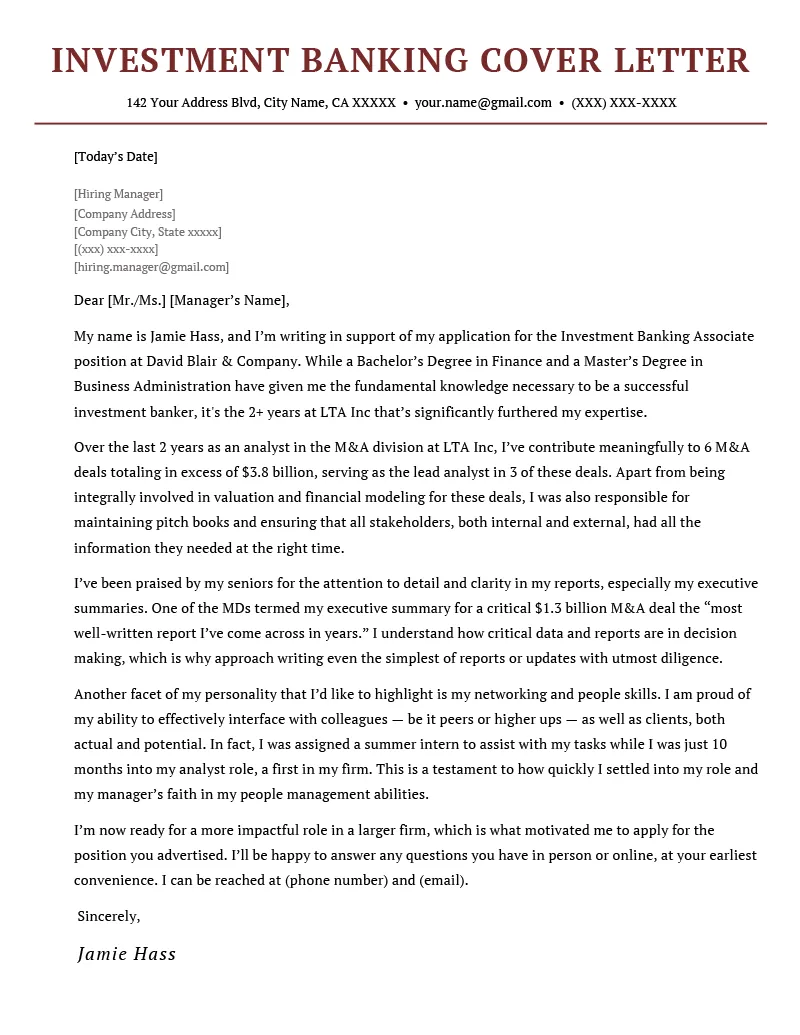
What is a Banking Cover Letter
A banking cover letter is a crucial document that accompanies your resume when applying for jobs in the financial sector. It’s your first chance to make a strong impression on a potential employer, offering a glimpse into your personality, skills, and enthusiasm for the role. Unlike a resume, which is a concise summary of your experience, a cover letter allows you to expand on your qualifications and explain why you’re the perfect fit for the specific banking position. It’s a space to highlight your relevant experiences and tailor your application to the specific requirements outlined in the job description. A well-crafted cover letter can significantly increase your chances of landing an interview and ultimately securing the job.
Why is a Cover Letter Important for Banking Jobs
In the competitive world of banking, a cover letter is not just an optional extra; it’s a necessity. Banking roles often require a high degree of precision, communication skills, and attention to detail. A cover letter allows you to demonstrate these qualities directly. It provides an opportunity to show your understanding of the banking industry, the specific bank you’re applying to, and the role’s requirements. It allows you to weave a narrative, connecting your past experiences and skills with the needs of the employer. Moreover, a compelling cover letter can help you stand out from the many applicants, especially if you have unique experiences or skills that align with the bank’s values and goals. A well-written cover letter shows that you’ve invested time and effort into the application process, which is a strong indicator of your interest and dedication.
Highlighting Your Skills and Experience

When crafting your cover letter, make sure to spotlight the skills and experiences that are most relevant to the banking position you’re seeking. Review the job description carefully and identify the key skills and qualifications the employer is looking for. These might include financial analysis, customer service, risk management, or proficiency in specific software. Then, provide concise examples of how you’ve demonstrated these skills in your previous roles. For instance, if the job requires strong analytical skills, you could describe a project where you used financial modeling to identify and solve a business problem, detailing the positive outcome. By connecting your skills and experiences to the job requirements, you demonstrate your suitability for the role and increase your chances of getting noticed.
Quantify Your Achievements
Instead of simply listing your responsibilities, use numbers and data to quantify your achievements. This approach makes your accomplishments more impactful and helps potential employers understand the tangible value you can bring to their organization. For example, instead of saying “Managed customer accounts,” you could say “Managed a portfolio of 100+ customer accounts, resulting in a 15% increase in customer retention rates.” This level of detail provides concrete evidence of your success. Always use numbers and metrics to showcase your contributions, like the amount of money you helped save, the percentage increase in sales you achieved, or the number of projects you successfully completed. This helps create a compelling picture for the recruiter.
Tailoring Your Cover Letter
Generic cover letters are a big turnoff. Customize your cover letter for each banking job you apply for. This requires research into the specific bank and the role. Find out as much as you can about the company’s culture, values, and recent achievements. Then, explain how your skills and experiences align with the bank’s goals. Refer directly to the job description and explain how you meet each of the requirements. Show the hiring manager that you’ve done your homework. This level of personalization demonstrates genuine interest and shows that you’re serious about the opportunity. Furthermore, tailoring your letter demonstrates that you have the attention to detail that’s expected in the banking sector.
Top 5 Tips for a Banking Cover Letter

Tip 1 Research the Bank and the Role
Before you start writing, thoroughly research the bank and the specific role you’re applying for. Visit their website, read news articles, and check their social media accounts. Understand the bank’s mission, values, and recent activities. This will enable you to tailor your cover letter to their specific needs and showcase your understanding of their business. Study the job description closely. Identify the key skills, experiences, and qualifications the bank is seeking. This will guide you in selecting the most relevant information to include in your cover letter and in demonstrating how you meet the specific requirements. Researching shows genuine interest.
Tip 2 Showcase Relevant Skills
Make sure your cover letter highlights the skills most relevant to the banking job. These skills can be hard skills, like financial analysis, data analysis, or knowledge of banking regulations, or soft skills, like communication, problem-solving, and teamwork. Provide specific examples to support your claims. For instance, if the job requires strong analytical skills, you might describe a time you used financial modeling to analyze a business situation. Always tailor your skills to the job description. Avoid mentioning irrelevant skills. Demonstrate how your skills have helped you achieve positive results in your past roles. Showing your abilities is far more effective than simply listing them. This provides concrete evidence of your capabilities and increases your credibility.
Tip 3 Quantify Your Accomplishments

As mentioned earlier, quantifying your achievements makes your cover letter more impactful. Use numbers, percentages, and data to demonstrate the results you’ve achieved in your previous roles. For example, if you helped improve customer satisfaction, mention the percentage increase. If you streamlined a process, state how much time or money you saved. Quantifiable achievements provide concrete evidence of your abilities and the value you can bring to the bank. Quantifying your accomplishments enables the employer to easily measure your success and contributions. This demonstrates your ability to deliver real results.
Tip 4 Use Action Verbs
Start your sentences with strong action verbs to create a dynamic and engaging cover letter. Verbs such as “managed,” “analyzed,” “developed,” “implemented,” and “achieved” are examples of action verbs that can effectively highlight your accomplishments and responsibilities. Avoid weak or passive language. This will showcase you are proactive. For example, instead of writing “Responsibilities included managing customer accounts,” write “Managed customer accounts, resulting in a 10% increase in customer retention rates.” Action verbs make your cover letter more engaging. Action verbs make your accomplishments more impressive. Strong verbs will make your application stand out from the crowd.
Tip 5 Proofread Meticulously
Typos, grammatical errors, and spelling mistakes can significantly damage your chances of getting a job in banking. These errors suggest a lack of attention to detail, a crucial quality in the financial sector. Always proofread your cover letter carefully before submitting it. Use a grammar checker and spell checker, but don’t rely on them alone. Read your cover letter multiple times. If possible, ask a friend or colleague to review it as well. A fresh pair of eyes can often catch errors that you might have missed. A polished cover letter is a reflection of your professionalism and commitment. A mistake-free cover letter enhances your credibility and increases your chances of being taken seriously by the hiring manager.
Cover Letter Format for Banking Jobs

Opening Paragraph
Start your cover letter with a strong opening paragraph that immediately grabs the reader’s attention. State the position you’re applying for and how you found the job. Briefly mention your key qualifications and your enthusiasm for the role. This establishes your purpose and sets the tone for the rest of the letter. Avoid generic openings. Instead, personalize your introduction by referencing something specific about the bank or the role that interests you. This shows that you have done your research and are genuinely interested in the opportunity. The opening paragraph is your first chance to impress the employer, so make it count. Use strong and confident language to convey your eagerness to learn more about the opportunity.
Body Paragraphs
The body paragraphs are where you showcase your skills, experiences, and qualifications in detail. Use these paragraphs to expand on the key points you mentioned in your opening paragraph. Provide specific examples of how you’ve demonstrated relevant skills in your past roles. Quantify your achievements whenever possible. Tailor your content to the specific requirements of the job description. Use action verbs to describe your accomplishments. These paragraphs should tell a clear and compelling story about why you’re the best candidate for the job. Organize your body paragraphs logically, using headings and bullet points to make them easy to read. Focus on highlighting the most relevant information. Keep your writing concise, but detailed.
Closing Paragraph

End your cover letter with a strong closing paragraph that summarizes your interest in the role and your qualifications. Reiterate your enthusiasm for the opportunity and reiterate your skills, and offer thanks for the reader’s time. Clearly state your availability for an interview and include a call to action. For example, you could write, “I am eager to discuss how my skills can benefit your team. Thank you for your time and consideration. I am available for an interview at your earliest convenience.” Proofread your cover letter before sending it. Proofreading is an important step in the writing process to avoid any errors.
Common Mistakes to Avoid in a Banking Cover Letter
Generic Cover Letters
Submitting a generic cover letter is one of the most common mistakes. These letters, not tailored to the specific bank or role, demonstrate a lack of interest. Employers can easily spot generic cover letters. These letters fail to address the specific requirements of the job or to highlight relevant skills. You should always customize your cover letter. Research the bank and the role, and adapt your letter accordingly. Generic cover letters are often perceived as impersonal and uninspired. Employers want to see that you’ve invested time and effort into the application process. Tailoring your cover letter shows your enthusiasm and demonstrates your ability to understand the needs of the employer.
Typos and Grammatical Errors

Typos and grammatical errors can quickly diminish your credibility. In the banking sector, precision is paramount. Errors in your cover letter can raise concerns about your attention to detail. Proofread your cover letter thoroughly. Use spell-check and grammar-check tools, but also read your letter carefully to catch any errors. The best way to catch errors is to have someone else read your cover letter. A fresh pair of eyes can identify mistakes. This ensures that your cover letter presents you in the best possible light.
Focusing on “I” instead of “You”
While it’s important to highlight your skills and experiences, avoid making your cover letter all about yourself. Focus on what you can offer to the employer and the value you can bring to the role. Frame your accomplishments in terms of how they benefited your previous employers or customers. Instead of saying, “I managed customer accounts,” say “Managed customer accounts, resulting in a 15% increase in customer satisfaction.” The focus should always be on how your skills and experiences align with the bank’s needs. This demonstrates that you understand the importance of customer service and are focused on creating a positive experience.
Final Thoughts and Next Steps
Writing a strong cover letter for a banking job requires effort. It’s an important investment in your career. By following the tips and avoiding the mistakes outlined in this guide, you can significantly increase your chances of getting an interview and landing your dream job in the banking industry. Remember to research the bank, tailor your letter, and proofread it carefully. Your cover letter should highlight your skills and demonstrate your understanding of the role. Your cover letter is your opportunity to impress potential employers. A well-crafted cover letter makes a positive first impression. Now, take the next step and start writing your cover letter. Best of luck in your job search.