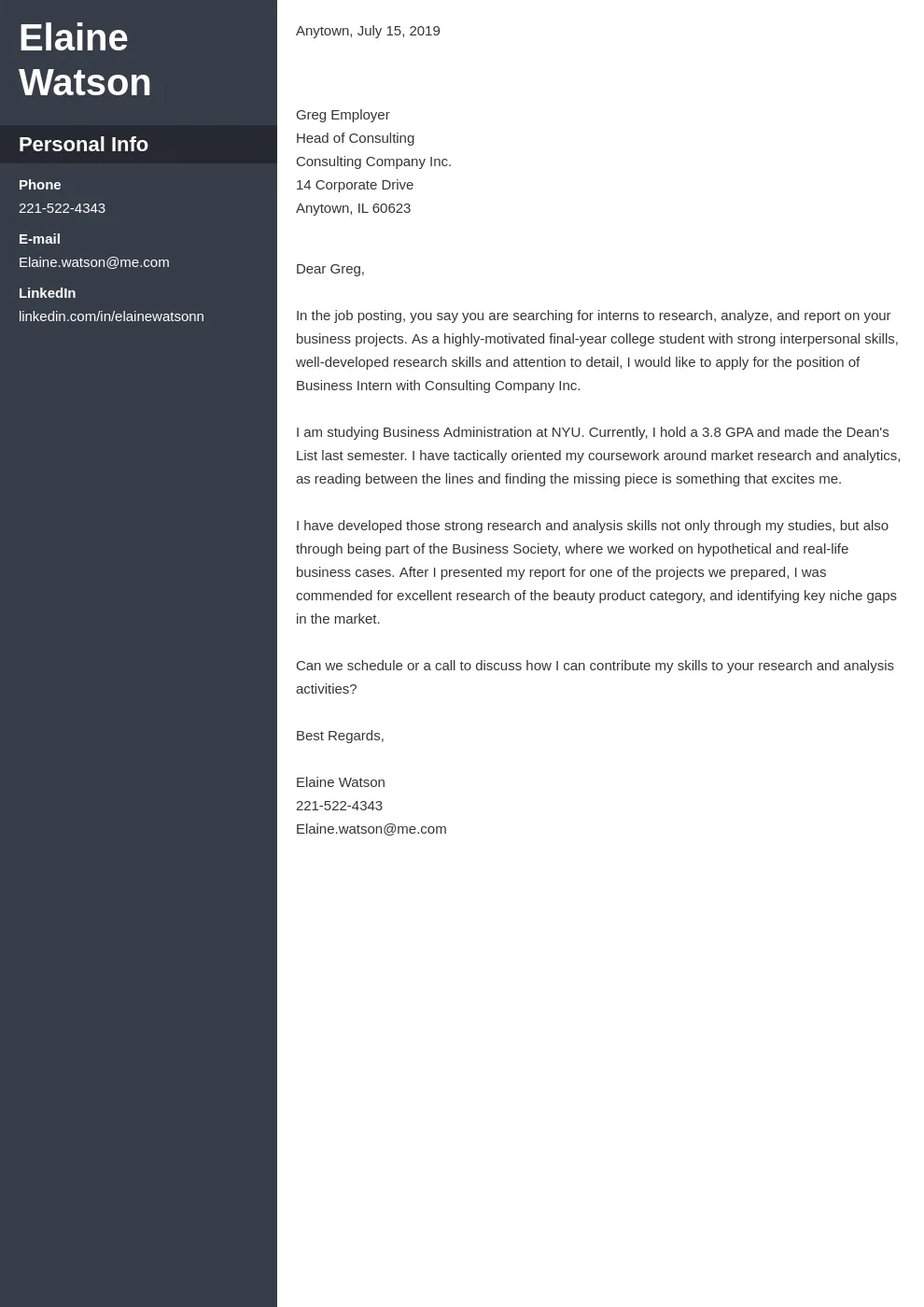
Cover Letter Examples
In the competitive landscape of job applications, a well-crafted cover letter can be your secret weapon. It’s your first opportunity to make a positive impression, showcasing not just your skills and experience but also your personality and enthusiasm. Unlike a resume, which is a straightforward summary of your qualifications, a cover letter allows you to tell a story, connecting your past experiences to the specific role you’re applying for. This article provides seven compelling cover letter examples tailored to different scenarios, along with insights to help you create your own standout application. Understanding the nuances of cover letter writing is crucial for anyone seeking to make a lasting impact on potential employers. Remember, a strong cover letter is not a mere formality; it’s a crucial component of a successful job application strategy. The goal is to capture the reader’s attention and secure an interview. By studying effective cover letter examples, you can significantly increase your chances of landing your dream job.
Understanding the Importance
Before diving into specific examples, it’s vital to grasp the significance of a well-written cover letter. A cover letter serves as a personalized introduction, providing context to your resume and highlighting your suitability for a specific position. It enables you to demonstrate your understanding of the company, the role, and the industry. This document provides a chance to elaborate on your accomplishments, quantify your achievements, and express your enthusiasm for the opportunity. A great cover letter is an opportunity to make an initial connection, displaying your communication skills and revealing your personality. It shows that you’ve invested time and effort into the application process, which can set you apart from other candidates. The ability to articulate your value proposition in a clear and concise manner is a crucial skill in today’s professional world, and the cover letter is where you can really show it.
Why Cover Letters Matter

Cover letters offer a unique opportunity to distinguish yourself from other applicants. They provide a platform to showcase your personality and writing style, which can sometimes be lost in the formality of a resume. By using the cover letter to highlight how your skills align with the job requirements, you can create a compelling narrative that captivates the hiring manager. This document enables you to provide context for your past experiences, explaining how your accomplishments have prepared you for the new role. A well-crafted cover letter can highlight your knowledge of the company and your genuine interest in the opportunity. This type of attention to detail makes you stand out. Your dedication to producing a strong cover letter communicates professionalism. It illustrates your commitment to the application process and increases your chances of getting an interview. With these skills, you can set yourself apart.
Common Mistakes to Avoid
Numerous mistakes can undermine the effectiveness of a cover letter, so avoiding these pitfalls is crucial. One common error is submitting a generic letter that’s not tailored to the specific job. This demonstrates a lack of interest and can be easily spotted by hiring managers. Another mistake is merely repeating information from your resume, which wastes an opportunity to provide additional insights. Grammatical errors and typos also damage your credibility, so proofreading is essential. Additionally, avoid being overly formal or using jargon that the reader may not understand. A cover letter should be concise and focused, highlighting relevant skills and experiences without being overly long or rambling. Finally, don’t forget to include a call to action, encouraging the hiring manager to contact you for an interview. Careful planning and execution will ensure that your letter has a meaningful impact on the reader.
Example 1 The Tailored Approach
The tailored approach is about personalizing your cover letter to demonstrate your understanding of the company and the specific role. It begins with thorough research of the company’s mission, values, and recent projects. You can then align your skills and experiences with their specific needs. This type of cover letter showcases your ability to meet the unique demands of the position and conveys genuine interest. Begin by addressing the hiring manager by name, if possible. Then, immediately explain why you’re a good fit, referencing the job description. This demonstrates your understanding of the role’s requirements. Provide examples of your accomplishments that are directly relevant to the job responsibilities, quantifying your achievements whenever possible. End with a clear call to action, requesting an interview. It is crucial to take the time to prepare this type of document. This level of detail often makes the difference.
Key Components

The key components of a tailored cover letter include a personalized greeting, a compelling opening statement, specific examples of your skills, and a strong closing. Begin with a personalized greeting, addressing the hiring manager by name if you know it. The opening statement should immediately capture their attention by stating your enthusiasm for the role and the company. In the body of the letter, provide specific examples of your relevant skills and experiences, quantifying your achievements whenever possible. Instead of just listing your responsibilities, explain the results you achieved. Quantify your accomplishments whenever possible. For example, state that you increased sales by a specific percentage or managed a project that was completed on time and under budget. End the letter with a call to action, expressing your interest in an interview. This shows your confidence and eagerness to move forward in the hiring process.
Highlighting Relevant Skills
Highlighting relevant skills is essential when composing a tailored cover letter. Carefully analyze the job description to identify the key skills and qualifications the employer is seeking. Then, in your cover letter, specifically mention these skills and provide examples of how you have demonstrated them in the past. For each skill you highlight, provide a specific example of how you used it to achieve a positive outcome. Use action verbs to describe your accomplishments. Instead of saying you were responsible for managing projects, say you ‘successfully managed’ multiple projects. The goal is to show, not just tell, what you’re capable of. Quantifying your achievements adds credibility to your claims. By focusing on relevant skills and providing concrete examples, you show the hiring manager that you possess the qualities required for the job.
Example 2 The Enthusiastic Letter
An enthusiastic cover letter is designed to express your passion for the role and the company. This style is particularly effective when applying for positions where personality and enthusiasm are valued. Begin by expressing your excitement about the opportunity and the company’s mission. Then, provide specific examples of your accomplishments and how they align with the role’s requirements. This type of letter gives you a chance to show the hiring manager why you’re a good fit. Focus on showcasing your knowledge of the company and the industry and how you will make a difference. Show your understanding of the company’s needs and how your skills can solve these issues. Conclude with a confident statement. State your eagerness for an interview.
Expressing Your Passion

Expressing your passion is a key element of an enthusiastic cover letter. Start by clearly stating your excitement about the opportunity and the company’s mission. Show your genuine interest in the role and explain why you’re drawn to it. Express your enthusiasm through your writing style by using strong, positive language. Avoid sounding generic or detached, and instead, let your personality shine through. Use words that convey excitement, such as ’eager,’ ‘passionate,’ and ’thrilled.’ Be sure to provide specific examples to back up your enthusiasm, relating your experiences to the job requirements. Show the hiring manager that you have a clear understanding of their needs. Explain the reasons why this role fits your career goals. With enthusiasm, you can set yourself apart from the competition.
Quantifying Achievements
Quantifying your achievements adds credibility to your enthusiastic cover letter. Instead of simply stating what you did, show the results you achieved. Include specific numbers and data to demonstrate the impact of your work. For example, rather than saying that you improved customer satisfaction, state that you increased customer satisfaction scores by a specific percentage. Use numbers to showcase your accomplishments, whether it is increasing sales, reducing costs, or improving efficiency. By providing quantifiable results, you transform your cover letter from a general statement into a compelling narrative. This level of detail proves you have the skills the hiring manager is seeking. Use data whenever possible to make your points even stronger.
Example 3 The Skills-Focused Letter
A skills-focused cover letter puts the emphasis on your abilities and how they align with the job requirements. This approach is particularly effective when you have specific skills that match the needs of the position. Begin by identifying the key skills that the employer is seeking, which you can find in the job description. Then, in your cover letter, highlight each of these skills and provide specific examples of how you have demonstrated them in the past. For each skill, describe a situation where you used it to achieve a positive outcome. If your skills are very specific, you might use this type of letter. Close with a confident statement. Offer to demonstrate those skills to the hiring manager.
Showcasing Abilities

Showcasing your abilities is at the heart of a skills-focused cover letter. Instead of just listing your skills, explain how you’ve used them in the past to achieve tangible results. Be clear and concise. Explain your abilities with the needs of the specific job. Use action verbs to describe your achievements, such as ‘managed,’ ‘developed,’ ‘implemented,’ and ‘achieved.’ Use specific examples to back up your claims. For instance, instead of saying you have strong communication skills, describe a time when you successfully presented to a large audience or mediated a conflict. The goal is to show that your skills are not just theoretical but also practical. This method will impress any hiring manager.
Matching Skills to Job Requirements
Matching your skills to job requirements is an important part of crafting a skills-focused cover letter. Carefully read the job description, making note of the key skills and qualifications the employer is seeking. Then, go through your own skills and experiences and identify which ones align with those requirements. In your cover letter, specifically address each of these skills and provide examples of how you have demonstrated them in the past. It might be a good idea to make a bullet-pointed list. Quantify your achievements whenever possible. For instance, if the job requires project management skills, describe a project you managed, the challenges you faced, and the positive outcomes you achieved. The goal is to demonstrate to the hiring manager that you possess the exact skills needed for the role. Make it easy for them to see that you’re a perfect fit.
Example 4 The Networking Letter
A networking cover letter is used when you have a connection within the company, such as a current employee or a former colleague. It is designed to leverage your existing relationships to get your foot in the door. Start by mentioning the person who referred you. This immediately gives you an advantage. Then, provide a brief overview of your qualifications and explain why you’re interested in the position. Highlight the connections you have and why this particular role is a good fit for your skills. This can be very useful, so always try to get a referral if possible. This method can give you the upper hand. Be sure to take the time to get to know the potential connection.
Leveraging Connections

Leveraging connections is key to writing a successful networking cover letter. Begin by clearly mentioning the person who referred you. This immediately grabs the hiring manager’s attention. Then, explain how you know the person and why they recommended you. This adds credibility to your application. Highlight any shared experiences or mutual interests, as this can help build rapport. Mention the person who referred you, then go on to explain how your skills and experience align with the job requirements. Emphasize your interest in the company and the specific role. Finally, express your gratitude for the referral and indicate your willingness to provide additional information. With this method, you can stand out from the competition.
Following Up Effectively
Following up effectively is crucial after submitting a networking cover letter. Send a thank-you note to the person who referred you, reiterating your appreciation for their support. Then, send a follow-up email to the hiring manager a week or so after submitting your application. Reiterate your interest in the position and express your gratitude for the opportunity to be considered. If you haven’t heard back within a reasonable timeframe, consider sending a second follow-up email. This demonstrates your continued interest and initiative. Keep the tone polite and professional. Always keep your communication concise and focused. Following up shows you are really interested in this particular job. Always be polite and show gratitude.
Example 5 The Problem-Solving Letter
The problem-solving cover letter focuses on your ability to identify challenges and offer solutions. This is particularly effective for roles that require analytical thinking and strategic planning. Begin by identifying a specific problem the company is facing or that you believe you can address. Provide a brief overview of the problem and its potential impact. Then, present your solution. Explain how you would approach the situation and what steps you would take to solve the problem. Highlight your analytical skills. Demonstrate your ability to think critically and offer creative solutions. You should also show your ability to create a plan. This letter shows the hiring manager that you can come up with solutions.
Identifying and Addressing Challenges

Identifying and addressing challenges is the heart of a problem-solving cover letter. Start by researching the company and the industry to identify a specific problem that they are facing or that you believe they could improve. Then, provide a concise description of the problem, including its potential impact and why it’s important to address it. Next, propose a solution. Detail your approach to solving the problem, outlining the steps you would take and the specific strategies you would employ. Explain how your skills and experience make you uniquely qualified to solve the problem. Demonstrate your ability to think critically and offer creative solutions. Finally, quantify the benefits of your proposed solution whenever possible. Make it easy for the hiring manager to see your solution and its benefits.
Offering Solutions
Offering solutions is what makes a problem-solving cover letter effective. After identifying a specific problem, present your proposed solution in a clear, concise, and actionable manner. Explain the steps you would take to solve the problem. Detail the resources and strategies you would use. Justify your approach by explaining why your solution is the best one. Highlight the expected benefits of your solution. Show your understanding of the company’s needs and goals. Present your solution in a way that is easy for the reader to understand. Show your enthusiasm for this job by making it clear that you have researched their company and the challenges that they are facing. Demonstrate your ability to think critically and creatively. Your goal is to impress the hiring manager.
Example 6 The Concise Cover Letter
A concise cover letter is designed to be brief and to the point, focusing on key accomplishments. This is especially suitable for roles where brevity and directness are valued. Start with a brief introduction, stating your interest in the role and highlighting your most relevant skills. Then, focus on your most significant achievements. Quantify your accomplishments whenever possible. Keep the letter to one page. The goal is to highlight your experience. End with a call to action. This type of letter is effective because it captures attention quickly.
Keeping it Brief and Impactful
Keeping your cover letter brief and impactful is the core of this approach. Start with a concise introduction that immediately states your interest in the role and summarizes your most relevant qualifications. Then, focus on your key accomplishments. Instead of listing your responsibilities, highlight your most significant achievements and quantify your results whenever possible. Be sure to use action verbs. For example, instead of saying you ‘managed projects,’ say you ‘successfully managed’ projects. Eliminate unnecessary details and focus on the most important aspects of your experience. Write in a clear and concise style. Use bullet points. Avoid unnecessary jargon. Keeping it brief and impactful means the reader will quickly understand your value.
Focusing on Key Accomplishments
Focusing on key accomplishments is essential for a concise cover letter. Instead of just listing your job duties, highlight the results you achieved. Use numbers to quantify your successes. For example, instead of saying that you improved sales, state that you increased sales by 15% in one quarter. Choose the accomplishments that are most relevant to the job requirements. This will make your application more tailored. Use action verbs and be specific about what you achieved. Quantify your accomplishments. Focus on the impact of your work. This demonstrates your value to the employer. Make it clear what makes you the best candidate.
Example 7 The Creative Cover Letter
A creative cover letter is designed to showcase your personality and originality. This approach is especially effective for creative roles. Think outside the box and experiment with the format. For example, consider using an infographic or a video cover letter. The goal is to demonstrate your creativity and make your application memorable. Be sure to research the company. Make sure your creativity aligns with their brand. Always show that you understand their business. This type of cover letter has a high impact.
Thinking Outside the Box
Thinking outside the box is the key to a creative cover letter. Consider the specific role and company. Then, brainstorm innovative ways to present your qualifications. Explore unconventional formats. For example, create an infographic that highlights your skills and achievements. You could also make a short video that introduces yourself. Consider incorporating multimedia elements to showcase your creativity and stand out. While this approach can be highly effective, ensure that your creativity aligns with the company’s brand and culture. If they are not known for being creative, then this might not be the best strategy. Tailor your approach to the role and the company.
Showcasing Personality
Showcasing your personality is important in a creative cover letter. Let your personality shine through your writing style. Use humor, if appropriate, and express your unique perspective. Be genuine and authentic. Show your passion for the role and the company. Be careful to remain professional. Your goal is to make a memorable impression. Tailor your approach to the company’s culture. Your personality should be reflected in the way you write. This is your chance to stand out from the crowd and make a strong impression.
Conclusion
In conclusion, effective cover letters are not one-size-fits-all. The best approach depends on the specific role, the company, and your own unique strengths. By studying these seven examples, you can gain valuable insights into how to craft a cover letter that truly resonates with potential employers. Remember to tailor your cover letter to each job application. Always emphasize your relevant skills and experiences. By avoiding common mistakes and expressing your passion, you can significantly increase your chances of landing an interview and ultimately securing your dream job. Take the time to carefully review the job description. This document is the key to success. Use the right language and your application will stand out.