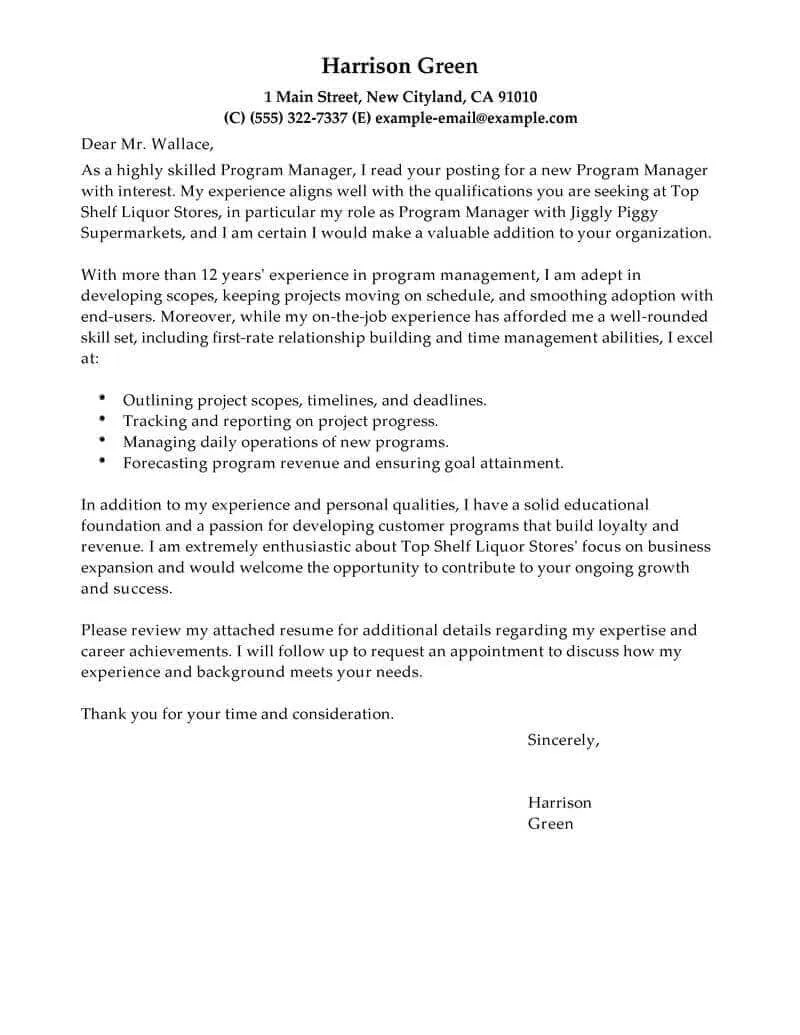
What is a Cover Letter?
A cover letter is a crucial document accompanying your resume when applying for a job. It serves as an introduction, providing context and highlighting the most relevant aspects of your qualifications and experience. Unlike a resume, which offers a factual summary, a cover letter allows you to showcase your personality, express your enthusiasm for the role, and explain why you’re a perfect fit for the company and the position. It’s your chance to make a strong first impression and convince the hiring manager to read your resume and consider you for an interview.
The Purpose of a Cover Letter
The primary purpose of a cover letter is to demonstrate your interest in the specific job and the company. It allows you to elaborate on your skills and experiences, connecting them directly to the job requirements outlined in the job description. Furthermore, a cover letter helps you showcase your communication skills, writing style, and ability to articulate your value proposition. It gives you an opportunity to set yourself apart from other applicants by explaining why you are the best candidate and what you can bring to the team.
Why Cover Letters Are Important

Cover letters are extremely important as they offer a personalized touch to your application. They show that you have taken the time to understand the company’s needs and have tailored your application accordingly. They also provide an opportunity to explain any gaps in your resume, address specific concerns, or elaborate on projects and achievements that are not fully detailed in your resume. In a competitive job market, a well-written cover letter can make the difference between getting an interview and being overlooked. Many hiring managers consider a cover letter essential for assessing a candidate’s communication skills and overall suitability for the role.
Elements of a Strong Cover Letter
A strong cover letter should be well-structured, concise, and engaging. It should include several key elements that work together to create a compelling narrative. By including these elements you increase your chances of landing the job. Remember to tailor the cover letter to each job application you send.
Your Contact Information
At the top of your cover letter, include your full name, address, phone number, and email address. Ensure this information is accurate and up-to-date. This allows the hiring manager to easily contact you if they want to proceed with your application. If you have a professional online profile, such as a LinkedIn profile, you can also include a link to it.
The Recipient’s Information

Below your contact information, include the hiring manager’s name (if known), their title, the company name, and the company’s address. Addressing the cover letter to a specific person, rather than using a generic greeting, shows that you have taken the time to research the company and demonstrate your genuine interest in the position.
A Compelling Opening
The opening paragraph of your cover letter is crucial for grabbing the reader’s attention. Start with a strong statement that highlights your enthusiasm for the position or company. Briefly mention how you found the job and, if appropriate, reference a mutual contact or a specific project you admire. This sets the tone for the rest of your letter and encourages the hiring manager to read on.
Highlighting Relevant Skills and Experience
In the body of your cover letter, focus on the skills and experiences that are most relevant to the job description. Provide specific examples of your accomplishments and how they align with the company’s needs. Use action verbs to describe your achievements and quantify your results whenever possible. This demonstrates your value and ability to contribute to the company’s success.
Expressing Enthusiasm and Interest

Throughout your cover letter, express your enthusiasm for the role and the company. Explain why you are interested in the specific opportunity and what attracts you to the organization’s mission, values, or culture. This demonstrates your genuine interest and motivation. If you know something about the company, you can add it here.
A Clear Call to Action
In the closing paragraph, reiterate your interest in the position and make a clear call to action. Express your eagerness to discuss your qualifications further and provide your contact information again. Thank the hiring manager for their time and consideration. This leaves a positive final impression and encourages them to contact you.
Cover Letter Examples
Here are some cover letter examples tailored for different situations. Consider these examples and customize them for your specific needs.
Example for a Recent Graduate

Dear [Hiring Manager name],
I am writing to express my enthusiastic interest in the [Job title] position at [Company name], as advertised on [Platform]. As a recent graduate from [University name] with a degree in [Major], I am eager to apply my skills and knowledge to a challenging and rewarding role.
During my academic career, I excelled in [Relevant coursework/projects]. My [Project name] demonstrated my ability to [Key skills]. I am proficient in [Relevant software/tools], and I am a quick learner with a strong work ethic.
I am particularly drawn to [Company name]’s [Company values/mission]. I am confident that my skills and passion align perfectly with your requirements.
Thank you for your time and consideration. I look forward to hearing from you soon.
Sincerely, [Your Name]
Example for Career Change
Dear [Hiring Manager name],
I am writing to express my interest in the [Job title] position at [Company name]. Although my background is in [Previous field], I am eager to transition my skills and experience to the [New field] industry.
In my previous role at [Previous company], I developed [Transferable skills], which I believe are highly relevant to this position. I am proficient in [Skills] and have a proven track record of [Achievements].
I am particularly excited about [Company name]’s [Company values/mission]. My passion for [New field] and my proven ability to adapt and learn quickly make me a strong candidate.
Thank you for your time and consideration. I look forward to the opportunity to discuss my qualifications further.
Sincerely, [Your Name]
Example for a Specific Job
Dear [Hiring Manager name],
I am writing to express my keen interest in the [Job title] position at [Company name], as advertised on [Platform]. With my [Number] years of experience in [Industry], I am confident that I possess the skills and qualifications necessary to excel in this role.
In my previous role at [Previous company], I was responsible for [Key responsibilities] and achieved [Specific achievements]. I am proficient in [Relevant software/tools] and possess a strong understanding of [Relevant industry knowledge].
I am particularly impressed by [Company name]’s [Specific project/initiative]. I am eager to contribute my skills and experience to your team.
Thank you for your time and consideration. I look forward to the opportunity to discuss my qualifications further.
Sincerely, [Your Name]
Formatting Your Cover Letter

The format of your cover letter is just as important as its content. A well-formatted cover letter is easy to read, professional, and visually appealing. Proper formatting enhances readability and makes your cover letter stand out. Here’s how to make your cover letter stand out.
Choosing the Right Font and Size
Select a professional and easy-to-read font such as Times New Roman, Arial, or Calibri. Use a font size between 10 and 12 points to ensure readability. Avoid using overly fancy or decorative fonts, as they can be distracting. Maintaining consistency in font style and size throughout your cover letter creates a polished look.
Using Proper Grammar and Spelling
Proofread your cover letter carefully for any grammatical errors or spelling mistakes. Use a grammar checker and spell checker to catch any errors you might miss. Correct grammar and spelling errors are a sign of attention to detail and professionalism. Errors can create a negative impression, so this is critical.
Proofreading Your Cover Letter

Always proofread your cover letter multiple times. Read it aloud to catch any awkward phrasing or grammatical errors. Ask a friend or family member to review your cover letter for feedback. Getting a second pair of eyes can help you identify areas for improvement and ensure that your cover letter is error-free.
Tailoring Your Cover Letter
Personalizing your cover letter to each job application is vital for showing genuine interest and tailoring your qualifications. Research the company and customize your letter to reflect your understanding of their specific needs and values. A generic cover letter is often overlooked. Here are some ways to tailor your cover letter.
Researching the Company
Before writing your cover letter, research the company and the specific role you are applying for. Visit their website, read news articles, and check their social media presence to gain a better understanding of their mission, values, and recent initiatives. This information will help you customize your cover letter and demonstrate your interest.
Customizing for Each Application
Adjust your cover letter to match the job description and the company’s specific needs. Highlight the skills and experiences that are most relevant to the position. Use keywords from the job description and tailor your examples to align with the company’s expectations. Make sure your cover letter is relevant to the particular job.
Dos and Don’ts
Here are some essential dos and don’ts to keep in mind when writing your cover letter. Following these guidelines ensures that your cover letter is effective and professional.
Do Highlight Your Achievements
Focus on your accomplishments and quantify your results whenever possible. Use action verbs to describe your achievements and provide specific examples to demonstrate your value. This helps the hiring manager understand what you can bring to the company and showcase your impact.
Do Use Action Verbs
Start sentences with strong action verbs to make your cover letter more dynamic and engaging. Action verbs like ‘managed,’ ‘developed,’ ‘achieved,’ ’led,’ and ‘implemented’ help you present your accomplishments more effectively and capture the hiring manager’s attention.
Don’t Be Generic
Avoid using generic phrases and templates. Tailor your cover letter to each specific job application and avoid sending the same letter to multiple employers. Show that you have taken the time to research the company and understand the role’s requirements.
Don’t Exceed One Page
Keep your cover letter concise and to the point, aiming for one page in length. Hiring managers are busy and don’t have time to read lengthy cover letters. Focus on the most relevant information and avoid unnecessary details. If the information is not relevant, omit it.
Conclusion
Writing a compelling cover letter is a crucial step in the job application process. By following these guidelines and tailoring your cover letter to each opportunity, you can significantly increase your chances of getting an interview. Remember to showcase your skills, express your enthusiasm, and highlight your achievements. A well-crafted cover letter can make all the difference in helping you land your dream job. Good luck with your job search!