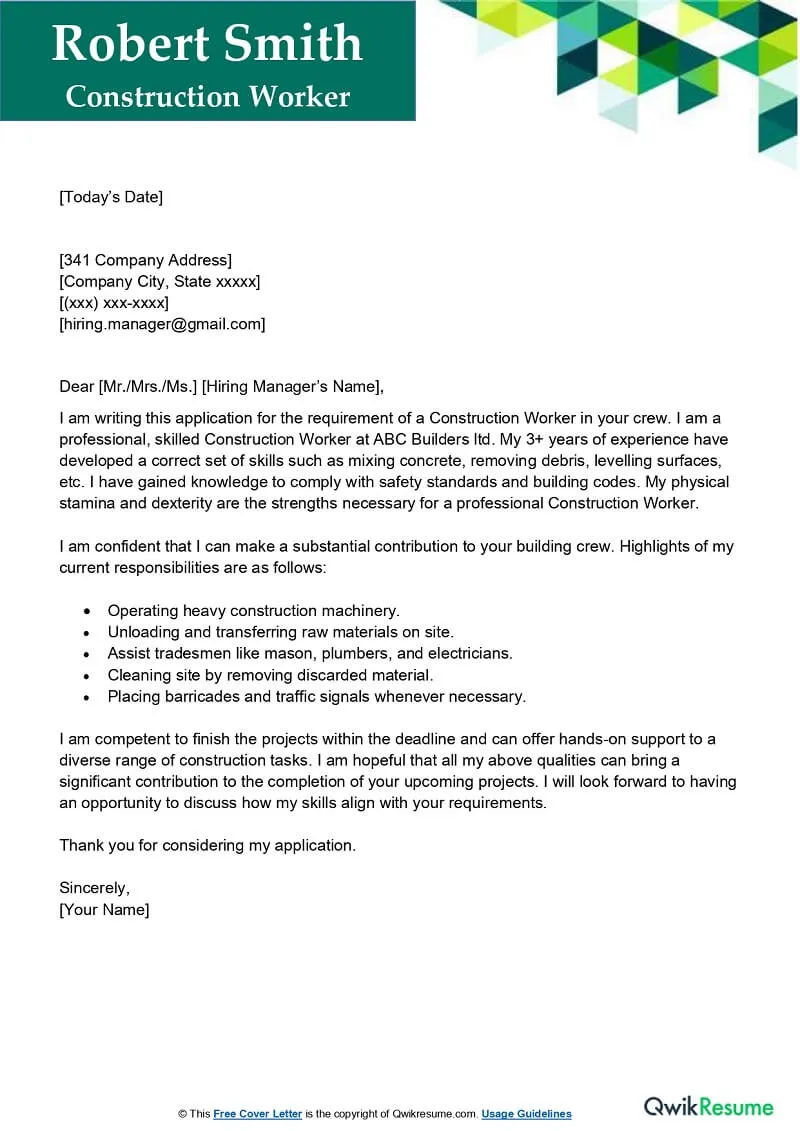
In the competitive construction industry, a well-crafted construction cover letter is your first chance to make a strong impression. It’s not just a formality; it’s your opportunity to showcase your skills, experience, and passion for the job. A compelling cover letter can significantly increase your chances of landing an interview and ultimately, securing your dream construction role. This guide will provide you with the essential steps and insights to create a construction cover letter that grabs the attention of hiring managers and sets you apart from the competition. From highlighting your unique skills to tailoring your letter for each application, we’ll cover everything you need to know to make your application shine. Remember, your cover letter is a reflection of your professionalism and dedication, so make it count.
Highlighting Your Construction Skills
Your construction cover letter should immediately showcase your most relevant skills. Think about the specific job requirements and identify the skills that align with them. Are you proficient in blueprint reading, project management, or operating heavy machinery? Be specific and provide examples of how you’ve used these skills in the past. For instance, if you’re applying for a project manager role, highlight your skills in planning, budgeting, and team leadership. If you’re applying for a skilled trades position, emphasize your expertise in areas like carpentry, electrical work, or plumbing. Avoid generic statements; instead, provide concrete examples that demonstrate your abilities. This section is where you show, not just tell, what you can bring to the table. Focus on the skills that make you the perfect fit for the role.
Showcasing Relevant Experience
Your experience is a critical component of your construction cover letter. Detail your previous roles, responsibilities, and accomplishments. Use action verbs to describe your duties and highlight the projects you’ve worked on. Mention the size, scope, and complexity of the projects to give the employer a clear understanding of your experience level. If you have experience with specific construction types (e.g., residential, commercial, infrastructure), make sure to include that information. Also, mention any specializations or certifications you possess, such as OSHA certifications, or certifications in specific trades. The goal is to provide a comprehensive overview of your construction background, emphasizing the experience that aligns with the job description. Emphasize the most relevant and impressive experience that proves you are capable.
Quantifying Achievements in Construction

To make your cover letter even more compelling, quantify your achievements whenever possible. Instead of simply stating that you ‘managed projects,’ specify the number of projects, the budget size, and the results achieved. For example, you could say, ‘Managed 10 construction projects with budgets ranging from $500,000 to $2 million, consistently delivering projects on time and within budget.’ Or, if you improved efficiency, mention the percentage increase. This helps the hiring manager understand the tangible impact you’ve made in previous roles. Quantifiable achievements demonstrate your value and give the employer a clear sense of what you can bring to their organization. Provide numbers whenever you can, this will show the impact of your previous work.
Tailoring Your Letter to the Job
A generic construction cover letter will likely end up in the ‘rejected’ pile. Tailoring your letter to each job application is essential. Carefully read the job description and identify the key requirements and keywords. Then, customize your letter to directly address those requirements, showing how your skills and experience align with the employer’s needs. This might involve adjusting the order of your skills, highlighting specific projects, or emphasizing certain responsibilities. The more personalized your letter, the more likely you are to make a positive impression. Research the company and understand their values, projects, and goals. Demonstrate that you have taken the time to understand their specific needs. This level of personalization shows that you are genuinely interested in the role and the company.
Researching the Company
Before writing your construction cover letter, conduct thorough research on the company. Visit their website, read about their projects, and understand their mission and values. This information will help you tailor your letter to demonstrate how your skills and experience align with the company’s goals. Mention specific projects or aspects of the company that resonate with you. For example, if the company is known for its sustainability efforts, highlight your experience with green building practices. Or, if they specialize in a particular type of construction, emphasize your relevant experience. The more you know about the company, the better you can position yourself as a good fit. Tailoring your letter to the company will improve your chances of landing an interview. Also, it shows that you are truly interested in the company.
Matching Skills to Job Requirements

Carefully analyze the job description and identify the key skills and qualifications the employer is seeking. Then, in your construction cover letter, clearly demonstrate how your skills and experience match those requirements. Use the same keywords and phrases from the job description to emphasize your relevant expertise. Provide specific examples that show how you have successfully utilized these skills in the past. If the job requires experience with a particular software or equipment, mention your proficiency and provide details about your hands-on experience. Your goal is to create a direct link between your qualifications and the employer’s needs. By directly matching your skills to the job requirements, you make it easy for the hiring manager to see you as a strong candidate.
Formatting and Presentation
The format and presentation of your construction cover letter can significantly impact the reader’s first impression. Use a professional and easy-to-read font, such as Times New Roman, Arial, or Calibri, with a font size between 10 and 12 points. Use clear and concise language and avoid jargon or technical terms that the reader may not understand. The letter should be well-organized, with clear headings and subheadings to make it easy to scan. Keep the letter concise, ideally no more than one page. Ensure the letter is properly formatted with consistent spacing and margins. Use bullet points or numbered lists to highlight key skills or accomplishments, making the information easy to digest. A well-formatted letter demonstrates attention to detail and professionalism.
Professional Tone and Language
Maintain a professional and courteous tone throughout your construction cover letter. Use formal language and avoid slang, contractions, and casual expressions. The tone should reflect your respect for the hiring manager and the company. Avoid overly aggressive or boastful language, and instead, focus on highlighting your achievements and qualifications in a confident and humble manner. Be positive and enthusiastic about the opportunity, and express your genuine interest in the role and the company. The language you use is a reflection of your personality and professionalism, so it’s important to choose your words carefully. Make sure your cover letter sounds like you, but also conveys a high degree of professionalism, and interest in the potential opportunity.
Proofreading for Errors

Before submitting your construction cover letter, carefully proofread it for any errors in grammar, spelling, punctuation, and formatting. Errors can undermine your credibility and give the impression that you are not detail-oriented or professional. Use a spell-checker, but also read the letter carefully to catch any mistakes the spell-checker might miss. It’s always a good idea to have a friend or colleague review your letter as a fresh pair of eyes can often catch errors you might miss. A clean, error-free cover letter demonstrates your attention to detail and respect for the hiring manager. Proofreading is a critical step in the application process, so take the time to ensure your cover letter is polished and professional.
Call to Action
Your construction cover letter should include a clear call to action that encourages the hiring manager to take the next step. Express your interest in an interview and state your availability. Provide your contact information again, including your phone number and email address, to make it easy for the employer to reach you. Thank the hiring manager for their time and consideration. Avoid generic phrases like ‘I look forward to hearing from you,’ and instead, use a more proactive statement like ‘I am eager to discuss how my skills and experience can benefit your team and am available for an interview at your earliest convenience.’ A strong call to action shows enthusiasm and initiative.
Expressing Interest and Availability
In the closing paragraph of your construction cover letter, clearly express your interest in the role and your availability for an interview. Reiterate your enthusiasm for the opportunity and reiterate your skills. State that you are available to discuss your qualifications further and are eager to learn more about the position and the company. Specify your availability for an interview, such as ‘I am available for an interview at your earliest convenience’ or ‘I am available for a phone or in-person interview next week.’ This proactive approach demonstrates your commitment to the job and makes it easy for the hiring manager to take the next step. This clear call to action is key.
Providing Contact Information

Always provide your contact information at the end of your construction cover letter. Include your full name, phone number, email address, and optionally, your LinkedIn profile URL. Make sure your contact information is up-to-date and accurate. Ensure that your email address sounds professional and that your voicemail greeting is professional as well. This will ensure the hiring manager can reach you easily and quickly. Providing clear and accurate contact information makes it easy for the employer to follow up with you and schedule an interview. This is critical for making sure you are considered, and is the last impression you make.
In conclusion, a well-crafted construction cover letter is a powerful tool for making a strong first impression and securing your dream job. By highlighting your skills and experience, tailoring your letter to each job, and presenting it professionally, you can significantly increase your chances of success. Remember to showcase your accomplishments, use clear and concise language, and always proofread your letter for errors. Take the time to create a compelling construction cover letter, and you will be well on your way to landing your next construction role. Good luck!