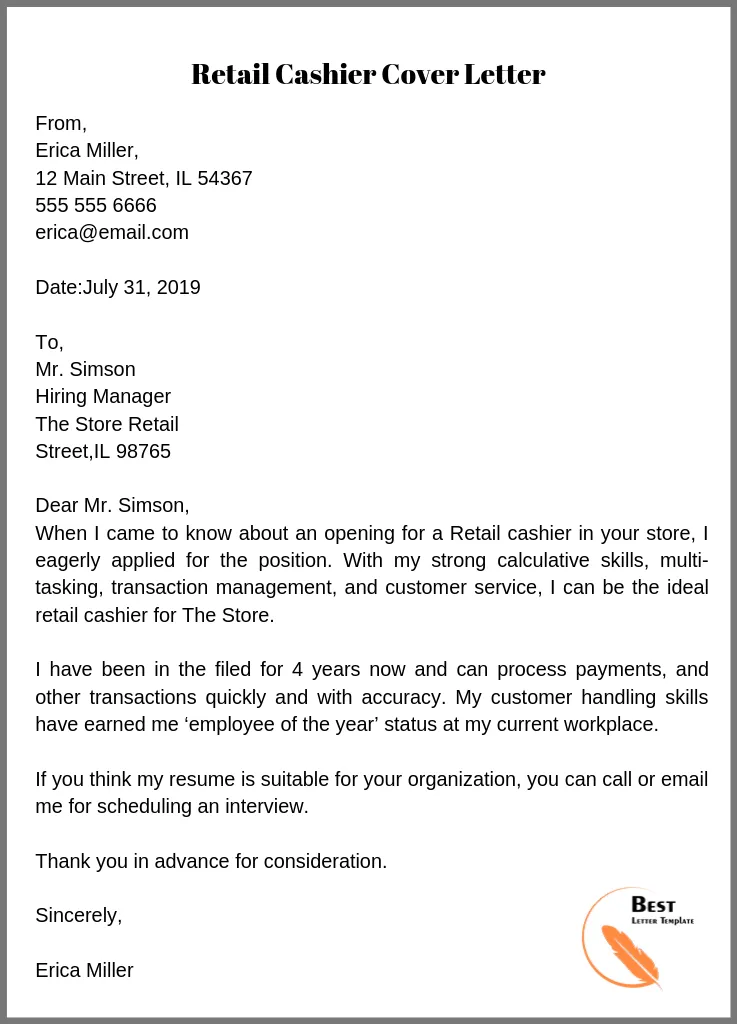
Crafting a Winning Cashier Cover Letter
A well-crafted cover letter is your first opportunity to make a positive impression on a potential employer. It’s your chance to introduce yourself, highlight your relevant skills and experience, and express your enthusiasm for the cashier position. This guide provides essential tips to create a cover letter that grabs attention and increases your chances of landing an interview. Remember, your cover letter should complement your resume, not simply reiterate it. It should tell a story about why you are the ideal candidate, showcasing your personality and what makes you unique. A strong cover letter demonstrates your attention to detail, your communication skills, and your genuine interest in the job.
Highlighting Relevant Skills for Cashier Positions
Cashier positions require a specific set of skills, both hard and soft. To make your cover letter stand out, identify and emphasize the skills that align with the job description. Be specific and provide examples of how you’ve used these skills in the past. This helps the hiring manager quickly see that you possess the qualities they’re looking for. Think about what makes a cashier successful, such as efficiency, accuracy, and a friendly demeanor. Tailor your skills section to the specific requirements of the job, using keywords from the job posting to signal your understanding of their needs. It’s about demonstrating that you have what it takes to excel in the role.
Customer Service Prowess

Customer service is at the heart of a cashier’s role. Highlight your ability to handle customer interactions with a positive attitude. Share instances where you resolved customer issues, went the extra mile to assist, or received positive feedback for your customer service skills. Did you receive a commendation for outstanding customer service? Did you successfully de-escalate a tense situation? These details are gold. Demonstrate that you understand the importance of customer satisfaction and that you can contribute to a positive shopping experience. Mention any training or experience in customer service-related roles.
Communication and Interpersonal Skills
Cashiers need excellent communication and interpersonal skills. Showcase your ability to communicate clearly, listen attentively, and interact effectively with diverse customers and colleagues. Mention your ability to explain products, handle inquiries, and resolve conflicts professionally. Do you have experience working in a team environment? Can you describe a time when your communication skills helped you achieve a positive outcome? Highlighting these aspects demonstrates your ability to create a pleasant and efficient checkout process. Provide concrete examples to back up your claims, such as how you communicate pricing or promotions.
Detail-Oriented Approach and Accuracy
Accuracy is vital for cashiers. Emphasize your attention to detail and ability to handle money accurately. Mention experience with cash registers, POS systems, and balancing cash drawers. If you have a track record of minimal errors, be sure to mention it. Did you participate in any training programs that improved your accuracy? Do you have experience with various payment methods, including cash, credit cards, and mobile payments? Providing examples, such as quickly and accurately processing transactions, will show that you possess the necessary skills to handle the financial responsibilities of the job.
Showcasing Experience Effectively

Your cover letter should provide a concise overview of your relevant work experience. Focus on experiences that align with the cashier role’s responsibilities. Even if your previous experience wasn’t directly as a cashier, highlight transferable skills like customer service, handling money, or operating point-of-sale systems. Be specific about your responsibilities, such as handling cash transactions, processing returns, or assisting customers with their purchases. If you’re a recent graduate or have limited experience, focus on any relevant skills from internships, volunteer work, or even school projects. Ensure you convey your experience in a clear and organized manner.
Quantifying Achievements in Your Cover Letter
Use numbers and statistics to make your achievements more impactful. Instead of saying, ‘I provided excellent customer service,’ say, ‘I consistently received positive feedback from customers and was recognized for resolving over 20 customer issues per week.’ Did you increase sales or improve efficiency in a previous role? Quantify those results. For example, mention the percentage by which you reduced transaction errors or the number of customers you served daily. By providing tangible evidence of your skills, you’ll make a stronger case for why you’re the right candidate. This makes your achievements more credible and shows you understand how to drive results.
Emphasizing Soft Skills
Soft skills are crucial for cashiers. Highlight traits such as reliability, teamwork, and a positive attitude. Give examples of how you’ve demonstrated these skills in past roles. For example, did you help a colleague during a busy shift, or did you consistently arrive on time and ready to work? Did you contribute to a positive work environment by being friendly and approachable? Show employers that you can handle the everyday challenges of the job. Employers value these soft skills just as much as your hard skills, as they are key to ensuring a good fit within their team and a pleasant environment for the customer.
Adaptability and Problem-Solving Skills

Cashier positions often require adaptability and problem-solving skills. Be prepared to handle various situations, from resolving customer complaints to dealing with technical issues. Describe instances where you’ve successfully solved a problem or adapted to changing circumstances. This can involve handling a busy checkout line efficiently or quickly learning new procedures. Were you able to troubleshoot a technical issue with a cash register? Did you handle a difficult customer situation calmly and effectively? These are the types of examples that demonstrate your ability to think on your feet and perform in a fast-paced environment. The ability to adapt to new situations is a key asset for any cashier.
Formatting and Structure for Impact
The format and structure of your cover letter are crucial for making a positive first impression. A well-organized cover letter is easier to read and demonstrates your attention to detail. Use a professional font, such as Times New Roman or Arial, and maintain consistent formatting throughout. Use a clear and concise layout with distinct sections for your contact information, salutation, body paragraphs, and closing. Keep the language professional and avoid slang or overly casual language. A clean and well-structured cover letter shows respect for the reader and enhances the overall impact of your application.
Essential Formatting Tips
To ensure readability, keep your cover letter concise. Aim for one page and use short paragraphs. Use bullet points to highlight key skills or achievements, making them easier to scan. Maintain consistent margins and spacing. Proofread your cover letter carefully to eliminate any typos or grammatical errors. A well-formatted letter immediately conveys your professionalism and attention to detail. Also, make sure your contact information is clearly displayed and easy to read. Ensure your name, phone number, and email address are correct. Remember that your cover letter is a professional document and should be treated as such.
Cover Letter Structure

Your cover letter should follow a standard structure to make it effective. Start with your contact information, followed by the date and the hiring manager’s contact information. Use a formal salutation, such as ‘Dear Mr./Ms./Mx. [Last Name],’ or ‘Dear Hiring Manager’ if you don’t know the name. The body of your letter should consist of three main parts: an introduction, a body that highlights your skills and experience, and a conclusion. In your introduction, state the position you are applying for and how you learned about it. In the body paragraphs, showcase your relevant skills and experience, providing specific examples. Conclude with a strong call to action, such as expressing your enthusiasm for the opportunity and thanking the reader for their time and consideration.
Tailoring Your Cover Letter
A generic cover letter is unlikely to impress. Tailor your cover letter to each specific job you apply for. Read the job description carefully and identify the key skills and requirements. Then, adjust your cover letter to highlight the skills and experiences that match the job’s needs. This shows the hiring manager that you’ve put in the effort and are genuinely interested in the position. Avoid using a generic template without making specific changes. Take the time to customize your cover letter by addressing the specific requirements listed in the job posting. By doing so, you can make a more compelling case for why you’re the best candidate.
Researching the Company
Before writing your cover letter, research the company. Understanding their mission, values, and culture can help you tailor your letter to match their needs. Visit their website, read news articles, and check their social media profiles. Use the information to demonstrate your understanding of the company and express why you want to work for them. For example, if the company emphasizes customer service, be sure to highlight your customer service skills. If they are known for their team-oriented environment, describe your teamwork experiences. Researching the company will also help you to show your interest in them and show your attention to detail.
Personalizing Your Letter

Beyond tailoring your letter to the job description, personalize it to connect with the hiring manager. If you know the name of the hiring manager, address the letter to them directly. Mention something specific that attracted you to the company or the position. Demonstrating genuine interest and enthusiasm can significantly increase your chances of getting an interview. This means you’ve taken the time to learn about the company and the role. Highlight your understanding of the company’s values and how your skills and experience align with their goals. Personalization helps you stand out from other candidates by showing that you’re invested in working for their company.
Avoiding Common Cover Letter Mistakes
Several common mistakes can ruin your cover letter. Avoiding these pitfalls will increase your chances of success. Ensure your cover letter is free of errors, well-formatted, and tailored to the job. By avoiding these common errors, your cover letter will stand out in a positive way, rather than be discarded due to its lack of attention to detail or lack of customization.
Typos and Grammatical Errors
Typos and grammatical errors can instantly undermine your credibility. Proofread your cover letter multiple times and ask a friend or family member to review it as well. Use spell-check, but remember that it won’t catch all errors. A single typo can suggest a lack of attention to detail and professionalism. Proofreading is crucial; it demonstrates your commitment to quality. Taking this extra step shows the hiring manager that you pay attention to detail. Always double-check your work before submitting it.
Generic Cover Letters

Sending a generic cover letter is a major mistake. Employers can easily tell when a letter is not tailored to the specific job or company. Customize your cover letter to match the job description and the company’s values. Show that you’ve researched the company and understand their needs. By taking the extra time to tailor your cover letter, you demonstrate your genuine interest in the role and increase your chances of making a positive impression. Generic cover letters lack the impact and specific information that hiring managers are looking for.
The Closing and Call to Action
Conclude your cover letter with a strong call to action. Thank the hiring manager for their time and consideration. Express your enthusiasm for the opportunity and your interest in an interview. Include your contact information again and make it easy for the hiring manager to reach you. Reiterate your interest in the position and your confidence in your ability to succeed. A clear and concise closing will leave the reader with a positive impression and encourage them to contact you.