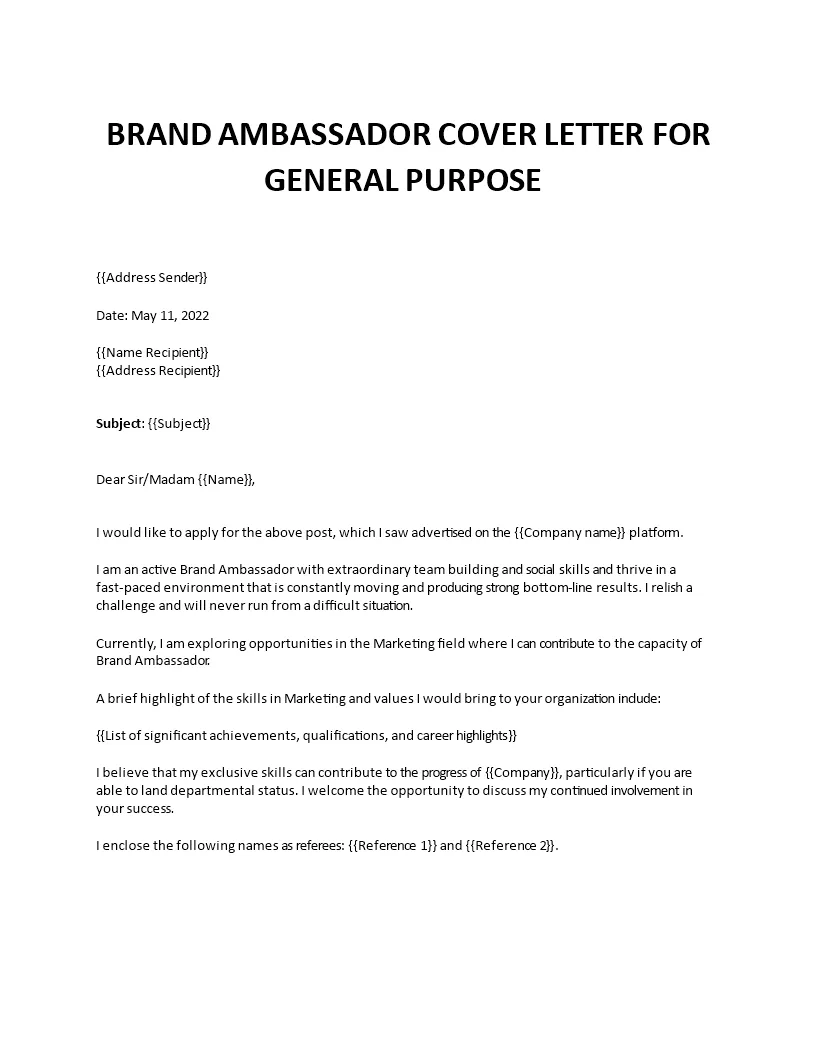
Crafting a Standout Brand Ambassador Cover Letter
A brand ambassador cover letter is your first opportunity to make a lasting impression on a potential employer. It’s more than just a formality; it’s your chance to showcase why you are the ideal candidate for the role. A well-crafted cover letter demonstrates your understanding of the brand, your relevant skills, and your enthusiasm for the opportunity. This guide will provide you with the essential steps to write a compelling brand ambassador cover letter that will get you noticed and increase your chances of landing an interview.
Understanding the Role and Requirements
Before you start writing, it’s crucial to understand the responsibilities and expectations of a brand ambassador. Research the specific role and the brand itself. Brand ambassadors are essentially the face of the company, promoting products or services, building brand awareness, and engaging with the target audience. Common tasks include attending events, creating social media content, interacting with customers, and representing the brand in a positive light. Understanding these core requirements will help you tailor your cover letter to highlight the most relevant skills and experiences.
Researching the Brand

Thorough research is key to demonstrating your interest and suitability for the role. Visit the company’s website, explore their social media channels, and read any recent news articles or press releases. This will give you insights into their brand values, target audience, and marketing strategies. Showcasing this knowledge in your cover letter shows you’ve taken the time to understand the brand and are genuinely interested in representing them. This also allows you to align your skills and experiences with their specific needs, making your application more compelling. (brand-ambassador-research)
Highlighting Relevant Skills and Experience
Your cover letter should highlight the skills and experiences that make you a strong candidate. Brand ambassadors require a unique blend of soft and hard skills. Focus on the skills most relevant to the position and provide examples of how you’ve used them effectively in the past. This could include experience in sales, customer service, public speaking, social media management, or event coordination. Be specific and quantify your achievements whenever possible, to demonstrate the impact you’ve made.
Showcasing Communication and Interpersonal Skills
Excellent communication and interpersonal skills are essential for brand ambassadors. In your cover letter, emphasize your ability to communicate clearly, concisely, and persuasively, both verbally and in writing. Provide examples of how you’ve effectively engaged with others, resolved conflicts, or built relationships. Highlight your ability to connect with people from diverse backgrounds and create a positive and engaging experience for them. Demonstrate your enthusiasm and ability to represent the brand’s voice and values. (brand-ambassador-skills)
Demonstrating Brand Alignment

Employers want to see that you align with their brand values and target audience. Your cover letter should reflect your understanding of the brand’s mission, values, and products or services. Show how your personality, interests, and values align with the brand’s image. Describe how you personally use or enjoy their products, or how you resonate with their messaging. If possible, share an example of how you’ve used their products or interacted with their brand in a positive way. This will show the employer that you’re a genuine fan and understand what the brand is all about. (brand-ambassador-alignment)
Quantifying Achievements
Whenever possible, quantify your achievements to demonstrate your impact. Instead of saying “I increased sales,” say “I increased sales by 15% in three months.” This provides concrete evidence of your abilities and shows the employer the value you can bring to the role. Include specific metrics such as the number of customers you’ve assisted, social media engagement rates, or event attendance figures. This data provides a clear understanding of your achievements and showcases the value you can bring to their team. (brand-ambassador-achievements)
Structuring Your Cover Letter for Impact
A well-structured cover letter is easier to read and more likely to capture the reader’s attention. Use a professional format with clear paragraphs, concise sentences, and a logical flow of information. Ensure your letter is free of grammatical errors and typos. A well-formatted cover letter demonstrates attention to detail and professionalism, increasing your chances of getting noticed.
Contact Information and Salutation
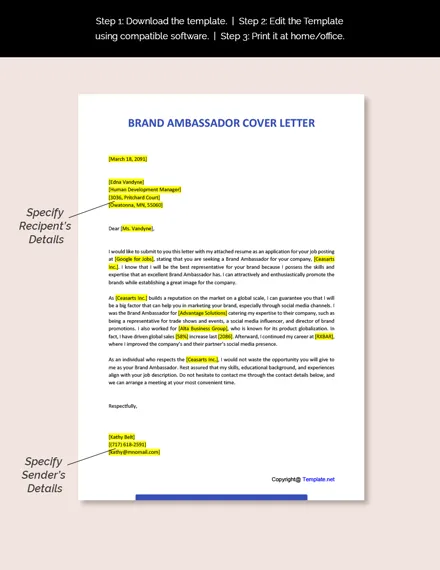
Start your cover letter with your contact information, including your name, phone number, email address, and LinkedIn profile URL (if applicable). Use a professional salutation, such as “Dear [Hiring Manager name],” or “Dear [Brand Name] Hiring Team.” Research the hiring manager’s name to personalize your letter and make a better first impression. If you can’t find a specific name, use a general salutation such as “Dear Hiring Manager.”
Opening Paragraph: Grabbing Attention
Your opening paragraph is your chance to grab the reader’s attention. Start with a strong statement that highlights your enthusiasm for the role and the brand. Briefly mention your relevant experience and skills. Express your understanding of the brand and your excitement about the opportunity to contribute. The goal is to create a strong opening statement that makes the reader want to continue reading.
Body Paragraphs: Showcasing Your Value
In the body paragraphs, provide details about your experience, skills, and achievements. Use the STAR method (Situation, Task, Action, Result) to structure your examples, providing context, explaining what you did, and showcasing the results. Focus on how your skills and experiences align with the brand’s needs. Show how you can contribute to their success by creating content, building relationships, and increasing brand awareness. Explain what makes you a unique asset and why they should hire you.
Closing Paragraph: Call to Action

End your cover letter with a strong call to action. Reiterate your interest in the role and your excitement about the opportunity. State your availability for an interview and express your willingness to discuss your qualifications further. Thank the reader for their time and consideration. Keep your tone professional and enthusiastic, leaving a positive final impression.
Formatting and Proofreading
Proper formatting and meticulous proofreading are crucial for a polished cover letter. Ensure your letter looks professional, is easy to read, and is free of errors. A well-formatted letter enhances your credibility and increases your chances of making a positive impression. Errors can make a negative impression, so take extra care to present a flawless document.
Choosing the Right Tone and Style
The tone of your cover letter should be professional but also reflect your personality and enthusiasm. Use a positive and engaging tone that conveys your passion for the brand and the role. Adapt your writing style to align with the brand’s voice, but also be authentic. Maintain a balance between enthusiasm and professionalism. Consider using active voice and strong verbs to make your writing more dynamic and engaging.
Proofreading for Errors

Proofreading is one of the most critical steps in writing a cover letter. Carefully review your letter for any grammatical errors, spelling mistakes, typos, or punctuation issues. Read your cover letter aloud to identify any awkward phrasing. Consider having a friend or family member proofread your cover letter. Ensure your cover letter is error-free before submitting it. (cover-letter-formatting)
Tailoring Your Letter
Always tailor your cover letter to the specific job and brand. Avoid using a generic cover letter that could be sent to any company. Show the employer that you took the time to understand their needs and that you are the ideal candidate. Customize your letter by highlighting the skills and experiences most relevant to the specific role. Research the company and the job requirements, and then carefully tailor your cover letter to reflect the brand’s specific values and needs.
Brand Ambassador Cover Letter Examples
Reviewing brand ambassador cover letter examples can provide you with a better understanding of how to structure your letter and what to include. By studying different examples, you can gain insights into how to effectively showcase your skills, experience, and passion for the brand. These examples will help you to personalize your own cover letter and make it stand out from the competition.
Example 1: Focus on Experience

This example highlights past experiences in sales and marketing roles, emphasizing the candidate’s ability to build relationships and drive brand awareness. The letter details specific accomplishments, such as increasing sales by a certain percentage, managing social media campaigns, and coordinating successful events. The focus is on tangible results, demonstrating a proven track record of success.
Example 2: Focus on Skills
This example emphasizes the candidate’s strong communication, interpersonal, and problem-solving skills. The letter gives specific examples of how the candidate has used these skills in various situations, such as resolving customer complaints or creating engaging social media content. The focus is on the skills that make the candidate a versatile and adaptable brand ambassador.
Example 3: Highlighting Brand Alignment
This example emphasizes the candidate’s genuine passion for the brand and its products. The letter discusses how the candidate uses the products and how they align with the brand’s values. It includes anecdotes about the candidate’s positive experiences with the brand, and examples of the candidate’s ability to connect with the target audience. This letter highlights the importance of brand loyalty and a genuine enthusiasm for the brand’s mission.
Final Thoughts and Next Steps
Writing a compelling brand ambassador cover letter is an essential step in securing your dream job. By understanding the role, researching the brand, highlighting your skills, structuring your letter effectively, and tailoring it to each application, you can increase your chances of getting noticed and landing an interview. Take the time to craft a cover letter that reflects your unique personality and showcases your enthusiasm for the brand.
Key Takeaways for a Successful Application
Remember these key takeaways when writing your brand ambassador cover letter: research the brand thoroughly, highlight relevant skills and experience, quantify your achievements, structure your letter effectively, and tailor it to each application. Proofread meticulously and maintain a professional tone. These steps will increase your chances of creating a memorable and effective cover letter.
Preparing for the Interview
If your cover letter successfully grabs their attention, you’ll likely be invited for an interview. Prepare for the interview by researching the brand in-depth, practicing your answers to common interview questions, and preparing your own questions. Dress professionally and be prepared to showcase your enthusiasm and brand alignment. The cover letter is the first step; the interview is your chance to demonstrate how you’ll represent the brand and contribute to its success. (brand-ambassador-interview)