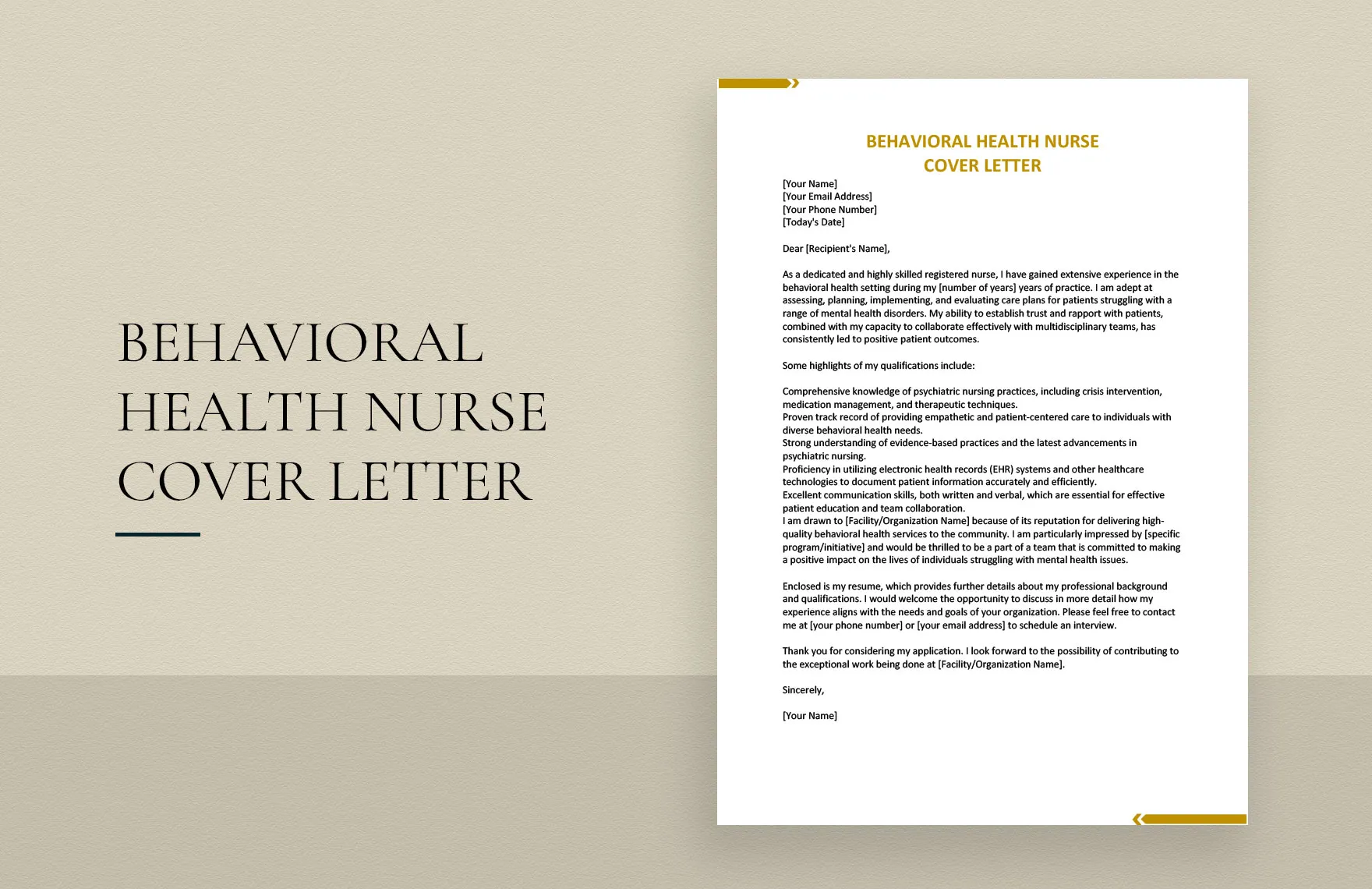
Crafting Your Behavioral Health Cover Letter
A well-crafted cover letter is your first opportunity to make a strong impression on potential employers in the competitive field of behavioral health. It serves as a crucial introduction, going beyond the resume to highlight your personality, passion, and specific qualifications. This guide offers a comprehensive approach to crafting a compelling cover letter that will increase your chances of landing your dream job in behavioral health. Understanding the nuances of the industry and showcasing your unique strengths are key to creating a cover letter that stands out.
Understanding the Purpose of a Cover Letter
The primary purpose of a cover letter is to introduce you to the hiring manager and provide context for your resume. It’s where you can articulate your interest in the specific role and the organization. Unlike a resume, which presents a factual account of your experience, a cover letter allows you to demonstrate your communication skills, personality, and enthusiasm. It provides a platform to connect your skills and experience to the needs of the employer, illustrating why you are the ideal candidate for the position. A strong cover letter demonstrates your understanding of the job and the organization’s mission.
Highlighting Relevant Skills and Experience

In a behavioral health cover letter, emphasize the skills and experiences most relevant to the job description. Identify the key requirements listed in the job posting and provide specific examples of how you’ve demonstrated those skills in previous roles. This could include experience in counseling, crisis intervention, program development, patient assessment, or specific therapeutic modalities. Quantify your accomplishments whenever possible. For instance, if you improved patient outcomes, state the percentage of improvement. If you managed a caseload, provide the number of patients you served. This data provides tangible evidence of your abilities.
Essential Components of a Behavioral Health Cover Letter
A well-structured cover letter is crucial for effectively communicating your qualifications. It should include several key components that guide the reader through your experiences and skills. Proper formatting, clear language, and a professional tone are essential to making a positive impression. These elements are fundamental in presenting your candidacy professionally.
Contact Information and Salutation
Begin your cover letter with your contact information, including your name, phone number, email address, and optionally, your LinkedIn profile URL. Then, address the letter to the hiring manager by name, if possible. Research the organization to find the correct name and title. If the name is unavailable, use a professional salutation such as “Dear Hiring Manager.” Avoid generic greetings like “To Whom It May Concern,” as this can make your letter seem impersonal. A personalized greeting sets a professional tone.
Opening Paragraph Grabbing Attention

The opening paragraph is your chance to grab the reader’s attention. Start by stating the position you are applying for and where you saw the job posting. Briefly mention your enthusiasm for the role and the organization. You might also include a brief, compelling statement that highlights your most relevant skill or accomplishment. The opening paragraph should immediately convey your interest and suitability for the position, making the reader want to continue reading to learn more about you. This paragraph sets the stage for the rest of your letter.
Body Paragraphs Showcasing Achievements
Use the body paragraphs to elaborate on your skills, experience, and achievements. Provide specific examples from your past roles to demonstrate how you have successfully met the requirements of similar positions. Use the STAR method (Situation, Task, Action, Result) to describe your experiences. This method helps you structure your answers clearly and effectively. For each skill or accomplishment, explain the situation, the task you faced, the actions you took, and the results you achieved. These concrete examples will provide clear evidence of your abilities and potential contributions.
Closing Paragraph Call to Action
Conclude your cover letter with a strong call to action. Express your interest in an interview and reiterate your enthusiasm for the role. Thank the hiring manager for their time and consideration. Provide your contact information again, making it easy for them to reach you. Ensure that the tone is polite, professional, and confident. A well-written closing paragraph ensures that the reader remembers your key qualifications and is motivated to contact you.
Tailoring Your Cover Letter for Specific Jobs

Generic cover letters are often overlooked. Tailor your cover letter to each specific job you apply for. This demonstrates your genuine interest in the role and the organization. Customize the content to align with the job description, highlighting the skills and experience that are most relevant to the position. Personalization makes your application stand out.
Researching the Organization and Role
Before writing your cover letter, thoroughly research the organization and the specific role. Understand the organization’s mission, values, and the services they provide. Visit their website, read their social media pages, and search for news articles. Then, carefully analyze the job description to identify the key responsibilities, skills, and qualifications. This knowledge will allow you to tailor your cover letter to address their specific needs and show that you understand the organization’s priorities and how your skills and experience can contribute.
Matching Skills with Job Requirements
Carefully compare your skills and experience with the requirements listed in the job description. Identify the skills and experiences that align most closely with the position. In your cover letter, clearly demonstrate how your qualifications meet or exceed the employer’s needs. Use keywords from the job description, but avoid simply restating the requirements. Instead, provide specific examples of how you have used those skills and achieved positive outcomes in previous roles. This will show the hiring manager that you are a good fit for the position.
Emphasizing Relevant Keywords

Many employers use applicant tracking systems (ATS) to scan cover letters and resumes for specific keywords. To ensure your cover letter is noticed, incorporate relevant keywords from the job description throughout your text. Use these keywords naturally and strategically, rather than stuffing them into the text. Keywords help ATS algorithms identify your application as a potential match, increasing the chances of your cover letter reaching a human reader. These keywords show that you understand the requirements of the job.
Formatting and Style
The formatting and style of your cover letter play a crucial role in its readability and professional appeal. A well-formatted cover letter is easier to read and more likely to leave a positive impression. Poor formatting can distract the reader and diminish the impact of your content. Consistency, clarity, and attention to detail are key.
Font and Readability
Choose a professional and easy-to-read font, such as Times New Roman, Arial, or Calibri. Use a font size between 11 and 12 points. Use consistent formatting throughout the document, including consistent spacing, margins, and alignment. Make sure there is ample white space to avoid making the document look cluttered. Use short paragraphs and bullet points to break up large blocks of text. A clean and professional layout enhances readability and highlights the key points.
Grammar and Spelling

Proofread your cover letter carefully for any grammatical errors or spelling mistakes. Use a grammar checker and spell checker, but also read the letter multiple times. Errors can make a negative impression and undermine your credibility. Pay attention to punctuation, sentence structure, and word choice. Have someone else review your cover letter to catch any errors you may have missed. Proofreading is essential.
Tone and Professionalism
Maintain a professional and positive tone throughout your cover letter. Use clear, concise language and avoid slang or jargon. Be enthusiastic, but remain professional in your writing. Address the reader directly and avoid sounding overly casual. Show respect for the organization and the hiring manager. Ensure your tone reflects confidence, enthusiasm, and a genuine interest in the position. Your tone sets the right impression.
Tips for Standing Out
In a competitive job market, it’s essential to take steps to make your cover letter stand out from the crowd. Going the extra mile can significantly increase your chances of getting noticed and invited for an interview. Including unique and memorable content helps create a lasting impression.
Quantifying Accomplishments

Instead of simply listing your responsibilities, quantify your accomplishments whenever possible. Use numbers and data to demonstrate the impact of your work. For example, instead of writing “Managed a caseload,” write “Managed a caseload of 30 patients, resulting in a 15% reduction in readmission rates.” Quantifiable results provide tangible evidence of your skills and experience. Such specific data makes your achievements more compelling and memorable.
Showcasing Passion for Behavioral Health
Express your genuine passion for behavioral health. Discuss what motivates you to work in the field and why you are interested in the specific position. You might mention a personal experience, a particular area of interest, or your commitment to helping others. This can humanize your application and make you more relatable. Letting your enthusiasm show will make you stand out to the hiring manager.
Addressing Potential Red Flags
If there are any potential red flags in your resume, such as a gap in employment or a change in career path, address them in your cover letter. Provide a brief, honest explanation and focus on what you learned from the experience. For example, if you took time off to care for a family member, you might mention the skills you developed during that time. Addressing these issues directly can demonstrate your integrity and ability to overcome challenges. Be honest and own your experiences.