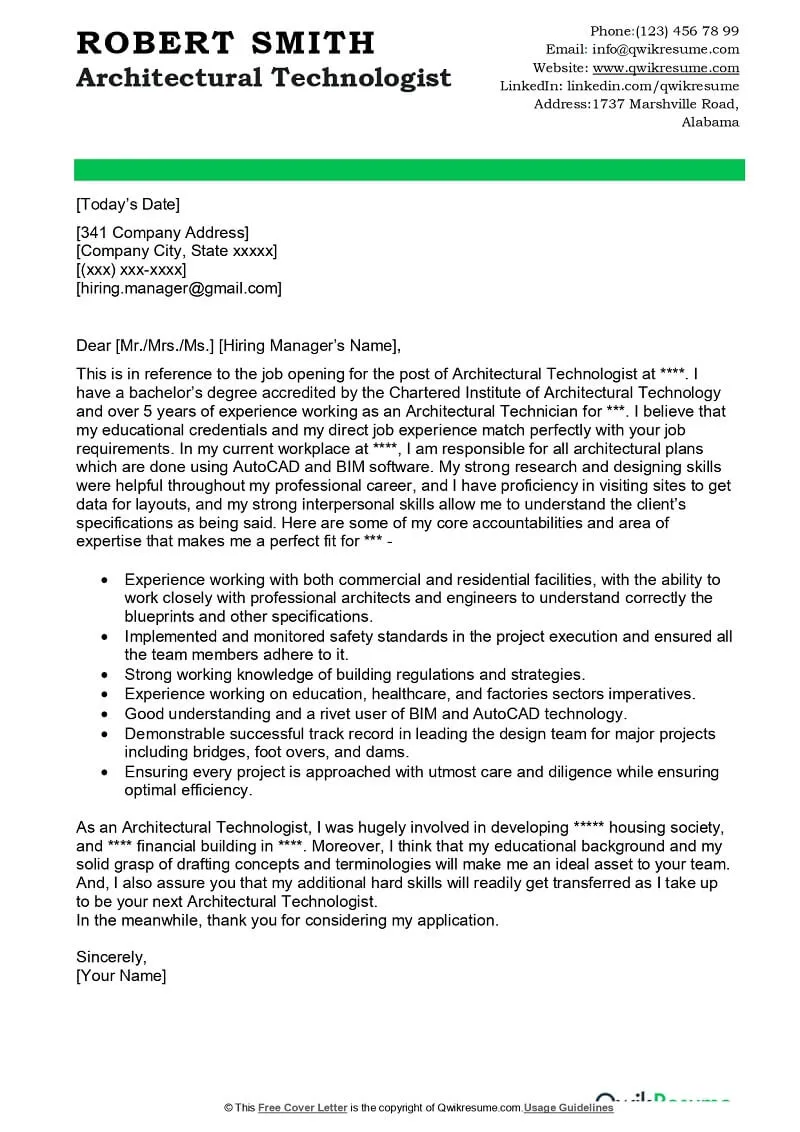
Understanding the Architecture Internship Cover Letter
An architecture internship cover letter is a crucial document that serves as your introduction to a potential employer. It’s your first opportunity to showcase your personality, passion for architecture, and suitability for the internship. Unlike a resume, which lists your experiences and skills, a cover letter allows you to elaborate on them, providing context and demonstrating your understanding of the firm and the specific role. It’s not merely a formality; it’s a chance to make a strong first impression, setting you apart from other applicants and piquing the employer’s interest. A well-crafted cover letter reflects your professionalism and attention to detail, skills highly valued in the architectural field.
Key Components of an Architecture Cover Letter
A strong architecture internship cover letter should include several key components to effectively communicate your qualifications and enthusiasm. These components work together to create a cohesive and compelling narrative, highlighting your suitability for the internship. Ensure each section is tailored to the specific internship and the firm you’re applying to, demonstrating your genuine interest and understanding. Remember, each aspect of your cover letter should contribute to presenting you as a well-rounded, professional, and enthusiastic candidate ready to contribute to the team.
Your Contact Information and the Date

Begin your cover letter with your contact information (name, phone number, email address, and optionally, your LinkedIn profile URL) and the date. This section ensures the recipient can easily reach you. Place this information at the top of the document, either left-aligned or right-aligned, depending on your preferred formatting style. The date is essential for tracking when the letter was written and submitted. Always ensure your contact information is accurate and professional, making it easy for the employer to connect with you without any difficulty.
The Recipient’s Information
Directly below your contact information, include the recipient’s details. If possible, address the letter to a specific person, such as the hiring manager or the principal architect. Researching the firm’s website or contacting them to find the correct name and title shows initiative and attention to detail. Include their full name, title, the firm’s name, and the firm’s address. If you’re unable to find a specific person, use a general title like “Hiring Manager,” but always strive to personalize the letter as much as possible to show you’ve taken the time to learn about the firm.
Crafting a Compelling Salutation
The salutation sets the tone for your letter. Aim for a professional and engaging opening. If you know the recipient’s name, use “Dear Mr./Ms./Mx. [Last Name],” This demonstrates respect and personalizes the letter. If you don’t know the name, alternatives include “Dear Hiring Manager” or “Dear [Firm Name] Team.” Avoid overly casual greetings. The salutation should immediately grab the reader’s attention and show that you’ve researched the firm and are genuinely interested in the internship opportunity. A well-chosen salutation is a good starting point for a successful architecture internship application.
Body Section Highlight Your Skills and Experiences

The body of your cover letter is where you demonstrate your suitability for the architecture internship. This section needs to convey your skills, experience, and enthusiasm. It should be concise, well-organized, and targeted to the specific requirements of the internship. The body should be broken down into paragraphs, each focusing on a particular aspect of your qualifications and showing your passion. The purpose is to convince the employer that you are a strong candidate by clearly highlighting your relevant skills, experiences, and accomplishments. It is crucial to make the reader understand your value.
Showcasing Your Architectural Skills
Clearly outline your architectural skills. These skills are a must in your application. Highlight your proficiency in relevant software (AutoCAD, Revit, SketchUp, etc.), and your understanding of design principles, construction documentation, and building codes. Provide specific examples where you’ve applied these skills, such as in academic projects or previous work experiences. Show that you’re well-versed in architectural concepts. For example, discuss your experience creating detailed drawings, or collaborating on design projects. Demonstrating your skills makes a big difference in your application.
Highlighting Relevant Experience
Describe any relevant experiences, including internships, part-time jobs, volunteer work, or academic projects. Even if your experience isn’t directly related to architecture, emphasize transferable skills such as teamwork, problem-solving, and project management. Provide details about your responsibilities and accomplishments in each role, quantifying your achievements whenever possible. For instance, if you helped reduce project costs, state the percentage or the amount saved. Relate your past experiences to the internship requirements and show how your skills and experiences align with the firm’s needs and goals. Highlighting your relevant experience is one of the most important parts of your letter.
Expressing Your Enthusiasm for the Internship

Express your genuine enthusiasm for the architecture internship. Explain why you’re excited about the opportunity and what you hope to gain from it. Mention specific aspects of the internship that appeal to you, such as the firm’s projects, design philosophy, or culture. Show that you’ve researched the firm and are genuinely interested in being part of their team. Your enthusiasm helps demonstrate that you are committed and that the firm and role align with your career goals. The reader should feel your excitement, so be as genuine as you can.
Why This Specific Firm
Explain why you chose this specific firm. Demonstrate your understanding of their work, values, and approach to architecture. Mention specific projects that have impressed you and explain why you are drawn to them. Show that you’ve done your research and are not just sending out a generic cover letter. Express how your skills and aspirations align with the firm’s values. The firm will feel like you are really interested in them, and your chances will improve. Your reasons should make them understand that you are a great addition to their team.
Closing Your Architecture Cover Letter
The closing of your cover letter is just as important as the opening. It should be professional, courteous, and encourage the employer to take the next step. End the letter on a strong note, summarizing your key qualifications and reiterating your interest in the internship opportunity. Your closing should leave the employer with a positive impression and prompt them to take action, such as inviting you for an interview.
The Formal Closing

Use a professional closing such as “Sincerely,” “Respectfully,” or “Best regards,” followed by your full name. Ensure your closing aligns with the tone of your letter. A formal closing indicates that you have respect for the reader and are well-prepared. Choose a closing that reflects your personality while maintaining a professional and respectful tone. Avoid casual closings like “Thanks” or “Cheers” to stay professional.
Expressing Gratitude
Express gratitude for the reader’s time and consideration. Thank them for reviewing your application and taking the time to consider you for the internship. This demonstrates professionalism and courtesy. Expressing gratitude shows that you value the opportunity and appreciate the effort the employer is taking to consider your application. It is good to show appreciation at the end of your letter to leave a positive impression.
Include a Call to Action
End your cover letter with a clear call to action. Invite the reader to contact you for an interview or to discuss your application further. Include your contact information again for easy reference. Make it easy for the employer to take the next step by providing them with a clear and direct path to do so. A well-placed call to action can significantly increase your chances of moving forward in the application process. Make sure you are available for interviews and other discussions.
Proofreading and Formatting Your Cover Letter

Before submitting your cover letter, thoroughly proofread it for errors and ensure it’s well-formatted. A polished, error-free cover letter reflects your attention to detail and professionalism. Proper formatting and careful proofreading can significantly improve your chances of making a positive impression. Never skip this step; it’s essential in showcasing your qualities to the prospective employer. Always pay attention to detail and polish it before you send it.
Formatting and Layout Tips
Use a clean and professional font such as Times New Roman, Arial, or Calibri, with a font size between 10 and 12 points. Maintain consistent formatting throughout the document. Use single spacing within paragraphs and double spacing between paragraphs. Ensure your margins are set to at least one inch on all sides. These simple formatting choices make your cover letter easy to read and visually appealing. Well-formatted cover letters look professional and increase the reader’s overall experience. Ensure that the firm receives a professional layout.
Proofreading for Errors
Carefully proofread your cover letter for any grammatical errors, spelling mistakes, and punctuation errors. Mistakes can undermine your credibility, so be thorough. Use a grammar checker and spell checker, but also read the letter aloud to catch any awkward phrasing or inconsistencies. Have someone else review your letter to get a fresh perspective and to catch any errors you might have missed. A clean, error-free cover letter shows that you pay attention to detail and care about presenting yourself professionally. Before submitting, be sure everything is perfect.