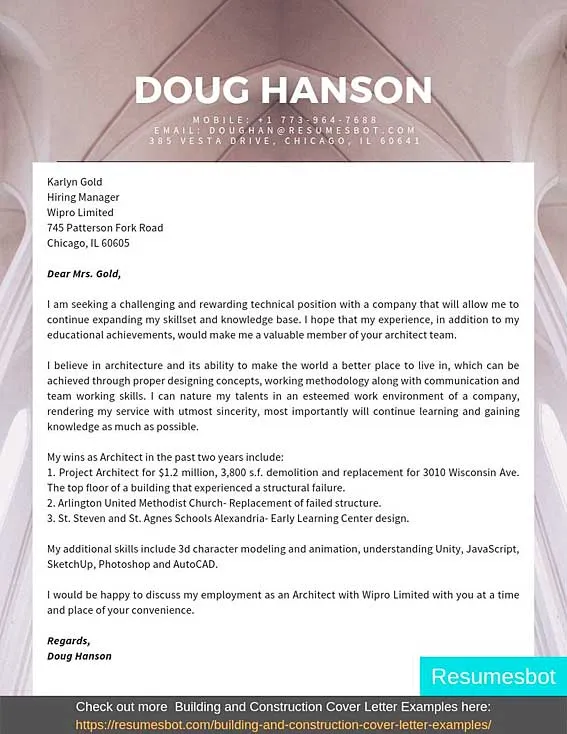
Understanding the Architect Cover Letter
The architect cover letter is more than just a formality it’s your first chance to make a strong impression on a potential employer. It provides a platform to showcase your personality, passion for architecture, and suitability for a specific role. Unlike a resume, which is a factual summary, a cover letter allows you to tell a story, demonstrating how your skills and experiences align with the employer’s needs and the job’s specific requirements. A well-crafted cover letter can significantly increase your chances of getting an interview, while a poorly written one can lead to your application being overlooked. This guide provides detailed instructions to help you create a compelling cover letter that stands out and gets you noticed.
What is an Architect Cover Letter?
An architect cover letter is a formal document accompanying your resume when you apply for an architectural position. It serves as an introduction, providing a snapshot of your professional background, skills, and career aspirations. It’s tailored to the specific job and company, highlighting how your qualifications make you the ideal candidate. The letter should demonstrate your understanding of the role and the company’s values, showing why you’re a good fit. More than just a summary, it expresses your interest and enthusiasm, setting the tone for a potential interview. Effectively, the cover letter helps an architect stand out from other applicants.
Why is a Cover Letter Important?

A cover letter is essential for architects for several reasons. It allows you to personalize your application, going beyond the information in your resume. It’s your chance to show your personality, enthusiasm, and writing skills, which are crucial in architecture. Moreover, it gives you the space to explain gaps in your employment history, elaborate on specific projects, and tailor your application to match the job description. Without a cover letter, your application might seem impersonal or generic. A well-crafted letter demonstrates your attention to detail and initiative, key qualities that employers look for. The cover letter is the first impression and could set the stage for a successful job search.
Key Components of a Winning Cover Letter
A winning architect cover letter is composed of several key elements, all working together to create a persuasive narrative. Each section contributes to the overall impact of your application, making it stand out from the competition. By mastering these components, you can create a cover letter that effectively highlights your skills, experience, and enthusiasm. This ensures that you make a strong impression on the hiring manager and increase your chances of securing an interview.
Contact Information
Start your cover letter with your contact information, including your name, address, phone number, and professional email address. Ensure your email address is professional and appropriate. Include the date and the hiring manager’s name and title, if known. Addressing the letter to a specific person shows that you’ve done your research and are genuinely interested in the position.
Your Name and Professional Title

Your name and any relevant professional title (e.g., Architect, Architectural Designer) should be clearly displayed at the beginning of your contact information. This helps the reader quickly identify who is applying for the position. It should be formatted consistently with your resume. Your name should stand out, being easily readable and professional. This is your chance to establish your brand and professional identity right from the start.
Date
Always include the current date on your cover letter. This is a standard practice and helps the recipient understand when the letter was written. The date should be formatted consistently with the rest of the document, typically placed beneath your contact information.
Hiring Manager’s Information
If possible, address your cover letter to a specific person at the company (e.g., Mr. John Smith, Hiring Manager). This shows that you’ve researched the company and are genuinely interested in the position. If you can’t find a name, use the appropriate title, like ‘Hiring Manager’ or ‘Recruiting Team.’ This personal touch can significantly make your cover letter stand out.
Greeting

The greeting sets the tone for your cover letter. Use a professional greeting like ‘Dear Mr./Ms./Mx. [Last Name]’ or ‘Dear Hiring Manager.’ If you don’t know the hiring manager’s name, ‘Dear Hiring Team’ or ‘To Whom It May Concern’ are also acceptable. Avoid informal greetings, as this is a professional communication.
Crafting the Perfect Opening Paragraph
The opening paragraph is your hook. It should immediately grab the reader’s attention and make them want to learn more. Start by stating the position you’re applying for and where you saw the job posting. Briefly mention why you’re interested in the role and the company, emphasizing your enthusiasm. Highlight a key skill or achievement that aligns with the job requirements. This introductory paragraph is your chance to make a memorable first impression and set the stage for a compelling application.
Highlighting Your Skills and Experience
The body of your cover letter should showcase your relevant skills and experience, demonstrating why you’re the ideal candidate. Tailor your letter to the specific requirements of the job description. Discuss your architectural skills, such as design, project management, or technical proficiency. Back up your claims with specific examples from your past projects. Quantify your achievements whenever possible to provide tangible evidence of your capabilities. The goal is to convince the reader you possess the skills to excel in the role.
Showcasing Relevant Projects

Describe projects that are relevant to the job. Choose projects that align with the company’s focus and the job’s responsibilities. Highlight your specific contributions and the outcomes achieved. Include details about the project’s scope, your role, and any challenges you overcame. Use strong action verbs to describe your involvement. This helps demonstrate your skills and expertise in a practical context.
Quantifying Your Achievements
Whenever possible, quantify your achievements to provide concrete evidence of your abilities. Instead of saying ‘managed projects,’ state ‘managed projects with budgets up to $X and completed them on time and within budget.’ Use numbers, percentages, and data to showcase your impact. Quantifiable achievements provide credibility and make your accomplishments more impactful.
Demonstrating Your Architectural Skills
Clearly demonstrate your architectural skills. Discuss your proficiency in design software (e.g., AutoCAD, Revit, SketchUp), knowledge of building codes, and experience with sustainable design practices. If the job requires specific skills, make sure to emphasize them. Highlight your ability to collaborate with teams, manage projects, and solve problems creatively. Demonstrate how your skills match the specific needs of the employer. For example, if the role is focused on sustainable design, ensure your letter highlights relevant experience and projects.
Tailoring Your Cover Letter to the Job Description

Customizing your cover letter for each job is crucial. Carefully review the job description and identify the key requirements and skills. Tailor your letter to directly address these requirements, using the same language as the job posting. Show the employer that you understand their needs and how you can meet them. Demonstrating that you understand the role demonstrates your interest and attention to detail.
Researching the Company
Before writing your cover letter, research the company. Understand their mission, values, and recent projects. This research helps you tailor your letter to align with the company’s goals and culture. Mention specific projects or initiatives that resonate with you. Show that you’re interested in their work and understand their vision. Researching the company shows initiative and a genuine interest in working there.
Matching Skills to Requirements
Carefully match your skills to the job requirements. Identify the keywords and phrases used in the job description. Highlight how your skills and experiences directly align with these requirements. Provide specific examples to support your claims. Avoid generic statements, and instead, offer tangible evidence of your abilities. By matching your skills, you demonstrate that you are a qualified candidate.
Using Keywords Effectively

Incorporate relevant keywords from the job description throughout your cover letter. This helps applicant tracking systems (ATS) identify your application as a potential match. Use keywords naturally, without sounding forced or unnatural. Make sure the keywords reflect your skills and experience accurately. By using keywords, you increase your chances of being noticed by recruiters and hiring managers.
Writing a Strong Closing
Your closing should reiterate your interest in the position and thank the reader for their time and consideration. Clearly state your availability for an interview. Provide a call to action and ensure you’re easy to contact. Your closing paragraph summarizes your key strengths and leaves a lasting positive impression. This reinforces your enthusiasm and prompts the reader to take the next step.
Expressing Enthusiasm
Express your genuine enthusiasm for the role and the company. Use phrases like ‘I am excited about the opportunity to…’ or ‘I am particularly drawn to…’ This shows that you are genuinely interested in the position and not just applying for any job. Enthusiasm is a valuable trait and can set you apart from other candidates. Showing you’re excited can create a positive impression on the hiring team.
Call to Action
Include a clear call to action, such as ‘I look forward to hearing from you’ or ‘I am available for an interview at your earliest convenience.’ This prompts the reader to take the next step. Make it easy for the hiring manager to respond. Provide your contact information again, and state you are ready to discuss your qualifications further. It encourages the reader to engage and consider your application seriously.
Proofreading and Editing Your Letter
Proofreading and editing your cover letter are essential steps in the writing process. Carefully review your letter for any grammatical errors, spelling mistakes, and typos. Ensure your writing is clear, concise, and professional. Ask a friend, colleague, or career advisor to review your letter for feedback. Proofreading helps you to ensure your message is conveyed with precision and professionalism. Polished writing reflects well on you.
Common Mistakes to Avoid
Avoid common mistakes that can undermine your cover letter. Avoid generic cover letters, as they show a lack of interest. Do not use jargon or overly technical language. Ensure your letter is free of spelling and grammatical errors. Do not exceed one page in length. Ensure your cover letter complements your resume and provides additional details. By avoiding these errors, you can improve the impact of your cover letter significantly.
Format and Style
The format and style of your cover letter are critical. Use a professional font, such as Times New Roman, Arial, or Calibri. Maintain consistent formatting throughout the document. Use clear headings and bullet points to improve readability. Ensure your letter is well-organized and easy to navigate. Using these formatting guidelines, your cover letter presents itself as well-structured and professional.
Length and Tone
Keep your cover letter concise and to the point. Aim for one page in length, unless otherwise specified. Maintain a professional and enthusiastic tone throughout. Avoid overly casual language or slang. Your writing should showcase your expertise, passion, and personality in a professional manner.
Architect Cover Letter Example Templates
There are several architect cover letter template examples available to provide inspiration. Consider the format and structure of each letter. These templates serve as a starting point. Use them to highlight your unique skills and experiences.
Example 1 Design-Focused
A design-focused cover letter highlights your creative skills and design expertise. It emphasizes your ability to conceptualize, develop, and execute architectural designs. Showcase projects that demonstrate your design skills, such as innovative building designs, and your technical proficiency. Highlight your passion for architectural design.
Example 2 Project Management Emphasis
A project management-focused cover letter emphasizes your project management abilities. Highlight your experience in overseeing projects, managing budgets, and coordinating teams. Showcase your organizational skills, problem-solving abilities, and experience in meeting deadlines. Detail how you managed projects to completion.
Example 3 Sustainability Focused
A sustainability-focused cover letter highlights your knowledge of sustainable design principles and practices. Showcase projects that incorporate green building strategies and environmentally friendly materials. Highlight your commitment to sustainable architecture and your ability to integrate sustainable design elements into projects. Highlight your knowledge of LEED or other green building certifications.
Final Thoughts and Resources
Crafting an effective architect cover letter takes time and effort. Tailor your letter to the specific job and company. Proofread carefully and seek feedback from others. With careful planning and a professional approach, your cover letter can significantly increase your chances of landing your dream job. Resources include online templates, career advice sites, and professional resume writers.