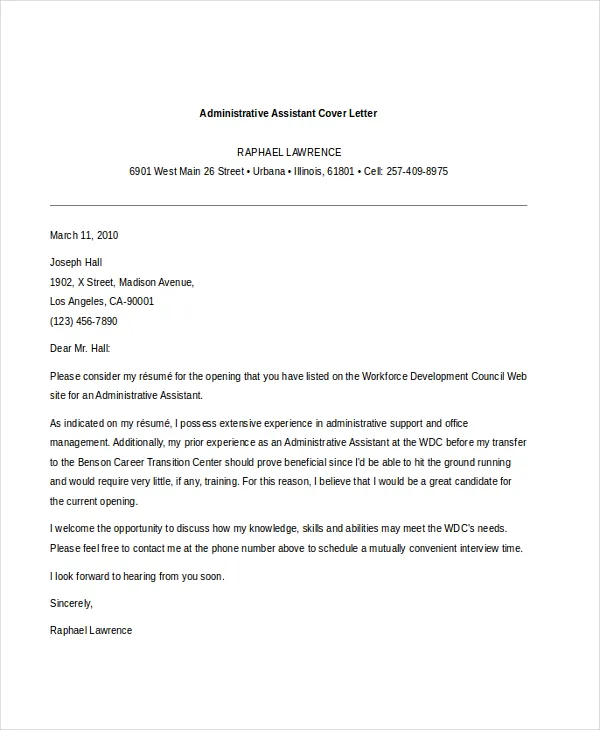
Essential Elements of an Administrative Assistant Cover Letter
A well-crafted administrative assistant cover letter is your first impression, often more crucial than your resume. It’s your opportunity to showcase not just your skills, but also your personality and enthusiasm for the role. Unlike a resume, which is a factual summary of your experience, a cover letter allows you to tell a story, connecting your abilities to the specific needs of the employer. By following the essential elements, you can significantly increase your chances of landing an interview and ultimately securing the job. This guide will walk you through crafting a compelling cover letter that highlights your strengths and demonstrates why you’re the ideal candidate. Remember that attention to detail, clear communication, and a tailored approach are key to a successful cover letter.
Contact Information and Formatting
Professional formatting sets the tone for your cover letter. It demonstrates your attention to detail and respect for the recipient. Always use a professional font like Times New Roman, Arial, or Calibri, and maintain a consistent font size (11 or 12 points) throughout the document. Ensure your contact information is accurate and easily accessible. Proper formatting also includes consistent margins (typically 1 inch on all sides), single spacing within paragraphs, and a blank line between paragraphs. Avoid using excessive colors or graphics; the focus should be on the content. Proofread meticulously before submitting to catch any formatting errors or typos. A well-formatted letter shows you care about the details and the recipient.
Your Name and Contact Details

At the top of your cover letter, in the left-hand corner, include your full name, address, phone number, and email address. This information allows the hiring manager to quickly and easily contact you. Ensure your email address is professional; avoid using nicknames or unprofessional handles. Double-check your phone number for accuracy. This section is crucial for ensuring that the employer can reach you if they decide to move forward with your application. Making it easy for them to contact you shows you’re organized and proactive. Always make sure to update these details if they change. Review these details carefully before sending your cover letter to avoid any errors.
Date and Recipient’s Information
Beneath your contact information, on the left side, write the date. Following the date, address the letter to the hiring manager or the specific person mentioned in the job posting. If a name isn’t provided, research the company website or LinkedIn to find out who the hiring manager is. Addressing the letter to a specific person demonstrates that you’ve taken the time to learn about the company and the role. If a specific name can’t be found, use a generic greeting like ‘Dear Hiring Manager.’ Include the company name and the address of the recipient in the format required by the company’s preferences. This also shows your attention to detail and respect for the company’s guidelines. Ensure the address is accurate to prevent the letter from being delayed or lost.
The Opening Paragraph
The opening paragraph is your chance to immediately grab the reader’s attention. Start by stating the position you are applying for and where you found the job posting. Then, express your enthusiasm for the opportunity and the company. Briefly mention a key skill or experience that aligns with the job description. Your goal is to hook the reader and make them want to learn more. Keep it concise and to the point, avoiding generic phrases. Tailor this opening to each specific job; a generic cover letter can be easily spotted. Showing a clear understanding of the role and the company’s needs will set you apart from other applicants. Make sure that the opening statement is compelling and quickly summarizes your purpose for writing.
Purpose and Enthusiasm

Your cover letter’s opening paragraph should clearly state the position you are applying for and where you saw the job posting. However, equally important is conveying your enthusiasm for the role and the company. This enthusiasm should be genuine and reflect your interest in the organization. Mentioning specific aspects of the company or the role that appeal to you shows that you’ve done your research. This demonstrates your genuine interest beyond just seeking employment. A positive and enthusiastic tone will capture the hiring manager’s attention and make them more inclined to read the rest of your letter. Conveying a sense of eagerness and highlighting why this opportunity is a good fit for you is crucial.
Highlighting Relevant Skills and Experience
The main body of your cover letter should highlight the skills and experiences that make you the best fit for the administrative assistant position. Refer to the job description and identify the key requirements. Then, provide specific examples from your past experiences where you have demonstrated these skills. Focus on achievements rather than just listing responsibilities. Use the STAR method (Situation, Task, Action, Result) to structure your examples, showcasing how your actions led to positive outcomes. Quantify your achievements whenever possible, using numbers to demonstrate your impact. This section is where you connect your qualifications directly to the needs of the employer. Show them how you can contribute and succeed in this role, offering concrete evidence.
Showcasing Skills
Administrative assistant roles require a diverse set of skills. Your cover letter should showcase your proficiency in communication, organization, and technical skills. Provide examples of how you’ve used these skills in previous roles to solve problems, manage projects, or improve efficiency. Tailor your skills to match those mentioned in the job description. Make sure to show, don’t just tell, the employer about your skills. Rather than simply stating that you have these skills, provide concrete examples that demonstrate your abilities. This will provide the employer with a clearer picture of your capabilities. Use action verbs and specific examples to bring your skills to life and to show you can do the job.
Communication Skills

Administrative assistants must have excellent communication skills, both written and verbal. Highlight your ability to write professional emails, compose clear and concise reports, and interact effectively with clients, colleagues, and superiors. Provide examples of how you’ve used communication skills in past roles. For example, describe a situation where you had to resolve a customer complaint or communicate a complex issue clearly. Mention any presentations or reports you have created. Focus on the effectiveness of your communication, and how it contributed to a positive outcome. Highlighting these abilities demonstrates your capacity to be an effective communicator and team member.
Organizational Abilities
Organizational skills are paramount in an administrative role. Showcase your ability to manage calendars, schedule meetings, maintain records, and prioritize tasks efficiently. Give examples of how you’ve organized projects or streamlined processes to improve workflow. Describe any experience with project management tools, filing systems, or database management. The more you can demonstrate your efficiency and attention to detail, the better. Show the employer your skills and your capability to keep information flowing smoothly. Highlight the strategies you’ve employed to keep everything organized and the impact this had on overall efficiency.
Technical Proficiency
Administrative assistants often require technical skills. Highlight your proficiency with software such as Microsoft Office Suite (Word, Excel, PowerPoint, Outlook), any CRM systems (like Salesforce or HubSpot), and other relevant tools. Include experience with online meeting platforms (Zoom, Microsoft Teams). Provide examples of how you have used these tools to accomplish tasks. If you have specific certifications or training, be sure to include them. Highlighting your technical skills is crucial. Also, include any knowledge of data entry and document management systems. This proficiency demonstrates your ability to easily adapt to new software and contribute to improved productivity.
Quantifying Achievements

Quantifying your achievements makes your cover letter more impactful. Instead of simply stating that you improved efficiency, provide specific metrics, such as ‘reduced processing time by 20%’ or ‘increased client satisfaction by 15%.’ Use numbers and data to demonstrate the impact of your actions and the value you brought to previous employers. This provides concrete evidence of your abilities and makes your achievements more believable. Whenever possible, link your accomplishments to the goals of the position you’re applying for. Quantifiable achievements are more persuasive and demonstrate tangible results.
Using Numbers to Demonstrate Impact
To effectively demonstrate the impact of your actions, use numbers and data. Instead of writing, ‘Managed a high volume of calls,’ you could say, ‘Managed an average of 50+ calls per day, ensuring a 95% customer satisfaction rate.’ Similarly, if you improved a process, indicate by how much. Using numbers makes your accomplishments more credible and easier to understand. This shows that you have not only done the work, but you understand its results. For instance, mention any cost savings you contributed to, increased sales, or any other measurable results. Always back your achievements with concrete data.
Tailoring to the Specific Job
A generic cover letter is easily identified and will likely result in rejection. Instead, tailor your cover letter to each specific job application. Carefully review the job description and identify the key requirements and preferred qualifications. Then, customize your letter to address these requirements directly. Use the same keywords and phrases from the job description. Provide specific examples from your experience that align with the job’s needs. Tailoring your letter shows the employer you understand the position and are serious about the opportunity. Customizing your letter takes effort, but it significantly increases your chances of getting noticed.
Researching the Company

Before submitting your cover letter, research the company to gain a better understanding of its mission, values, and culture. Visit the company website, review its social media profiles, and read any recent news or press releases. Showing that you’ve taken the time to understand the company’s culture can make a significant difference. Customize your letter to reflect your understanding of their goals. This demonstrates your genuine interest and helps you highlight the relevant skills and experiences. This will not only show that you are prepared, but it shows that you are invested in the company’s success.
The Closing Paragraph
The closing paragraph should reiterate your interest in the position and express your desire for an interview. Thank the hiring manager for their time and consideration. Always include a call to action, such as ‘I look forward to hearing from you’ or ‘I am available for an interview at your earliest convenience.’ Proofread this section carefully to ensure you haven’t missed any important details. The closing is your final chance to leave a positive impression. Always end on a professional note.
Reiterating Interest and Call to Action
In your closing paragraph, restate your interest in the administrative assistant position and express enthusiasm for the opportunity to contribute to the company. Thank the hiring manager for their time and consideration. Include a clear call to action. For example, state that you are available for an interview at their earliest convenience. Make it easy for the hiring manager to take the next step. This will leave them with a strong impression and make it clear that you want the job. The closing should be professional and memorable and prompt them to take the next step.
Professional Closing and Signature

Close your cover letter with a professional closing such as ‘Sincerely,’ ‘Respectfully,’ or ‘Best regards.’ Leave space for your signature, and type your full name below the closing. If you’re submitting an electronic cover letter, you may omit the signature or type your full name. Make sure your name is clear and legible. A clean, professional closing ensures the employer knows you’re serious and presents a polished final impression. Review all the elements for any typos, and make sure all sections of your letter have been carefully reviewed.