Why a Cover Letter for Acting Agencies Matters
In the competitive world of acting, securing representation from a reputable agency is crucial. But how do you grab the attention of agents who sift through countless submissions? The answer lies in a compelling cover letter. A well-crafted acting cover letter isn’t just a formality; it’s your first impression, your chance to stand out from the crowd. It’s the perfect opportunity to showcase your personality, passion, and professionalism – elements that a resume alone often fails to convey. Think of it as your personal introduction, a glimpse into your potential that can entice an agent to delve deeper into your credentials. The primary aim of a cover letter is to bridge the gap between your resume and the agent’s interest, motivating them to take action and potentially offer you representation. Without a strong cover letter, your application might get lost in the shuffle, never reaching the right person. It provides the context, the narrative, and the personal touch needed to make a memorable impact. A stellar cover letter is your key to opening doors and advancing your acting career.
Highlighting Your Acting Experience
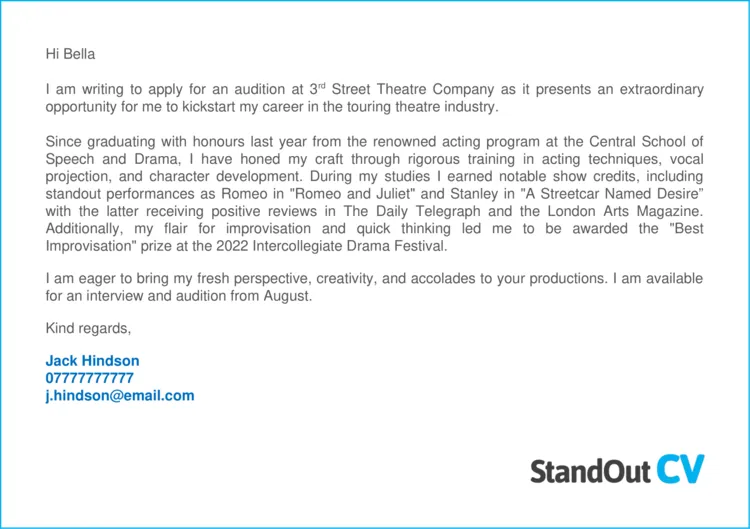
When composing your acting cover letter, one of the most important sections involves highlighting your acting experience. This is where you provide tangible evidence of your abilities and past achievements. Start by selecting the most relevant roles you’ve played. These should be parts that align with the agency’s focus and the types of roles you aspire to secure. Briefly describe each role, mentioning the project’s title, the production company, and the director if possible. Focus on your accomplishments within each role. Did you receive positive reviews? Did you play a pivotal part in the project’s success? Be specific. Instead of saying, “I played a lead role,” try, “I played the lead role of Juliet in ‘Romeo and Juliet’ at the prestigious Globe Theatre, where my performance was praised by critics for its emotional depth and stage presence.” Quantify your success whenever possible. Did the play sell out? Did it receive awards? Such details add weight to your claims. Make sure to tailor your experience to the agency. If the agency specializes in film, emphasize your film roles; if they focus on theater, spotlight your stage performances. This will show agents that you understand their business and the kind of talent they represent. Keep it concise; avoid listing every single credit. Instead, select the most impactful roles that highlight your skills and experience. Remember, the goal is to get them interested in you, not to recite your entire resume.
Choosing Your Best Acting Roles for the Cover Letter

Selecting the right roles to showcase in your acting cover letter is a strategic decision that can significantly influence the agency’s perception of your potential. Focus on roles that best demonstrate your versatility and range as an actor. Highlight roles that required you to portray different characters, or roles that allowed you to demonstrate specific skills, such as comedy, drama, or action. If you have performed in roles that have gained critical acclaim or received awards, be sure to include them prominently. The inclusion of award-winning performances not only showcases your talent but also lends credibility to your application. When selecting roles, give preference to those that are recent and relevant to the agency’s area of expertise. For instance, if you are applying to an agency that specializes in film, emphasize your film credits and any related experiences. Prioritize roles that align with the types of projects the agency represents. This will demonstrate that you understand the agency’s focus and have the skills needed to fit in with their roster. Make sure that your selection of roles represents a balanced portfolio. Include a mix of roles that display a wide range of skills, experiences, and genres. If possible, select roles that show your ability to collaborate with others, and that reflect your professionalism. It’s crucial that you choose roles that portray you in the best possible light and that you have chosen them intentionally to make a strong first impression.
Showcasing Your Skills
Your acting cover letter is the perfect platform to showcase your diverse skill set, going beyond the roles you’ve played. Agents want to know what sets you apart, the unique abilities that make you a valuable asset. Mention specific skills like dialects you’ve mastered, such as a flawless British accent or a convincing Southern drawl. If you have experience in stage combat, physical acting, or any specialized movement, highlight these. Skills like singing, playing musical instruments, or dance are all valuable additions. Be specific about your training. Did you study at a prestigious acting school? Have you taken masterclasses with renowned instructors? Include those details. Don’t just list your skills; provide examples. If you’re proficient in improvisation, mention that you have performed with an improv troupe. If you have dance skills, describe the styles you know and how you’ve incorporated them into your performances. Tailor this section to the agency’s focus. If they specialize in action films, emphasize your combat skills. If they work with musical theater, showcase your singing and dance abilities. Tailor your skills to align with the types of projects they represent. Providing tangible examples is key. For instance, instead of saying, “I am good at comedy,” write, “My comedic timing was praised in the role of…” This will give them a clearer picture of your skills. Demonstrating your skills effectively in your acting cover letter can significantly increase your chances of catching the agent’s attention and setting yourself apart from the competition.
Mentioning Your Training and Education
In your acting cover letter, it is essential to mention your training and education, as it demonstrates your dedication to the craft and provides agents with insights into your foundational skills. Highlight your formal training from reputable institutions, such as drama schools, universities with strong theater programs, or specialized acting workshops. Include the name of the institution, the dates of your enrollment, and any degrees or certifications you earned. Focus on the courses that are most relevant to acting, such as acting technique, voice and speech, movement, and on-camera acting. If you have participated in masterclasses, workshops, or private coaching with well-known acting coaches or industry professionals, be sure to include these as well. Providing details about the instructors and the subjects covered can add significant value. When describing your training, it’s crucial to show how it has benefited you. Did your training help you to develop specific acting techniques, improve your vocal projection, or enhance your understanding of character development? If so, explain these benefits. Mention any specific skills that your training has provided you. For instance, if you’ve taken a course in stage combat, specify that you are proficient in sword fighting or unarmed combat. This level of detail helps to build your credibility and showcases your ability. Training and education can also indicate the level of professionalism and the seriousness with which you approach your craft. Your goal is to demonstrate that you have invested in your acting career.
Tailoring Your Cover Letter to the Agency
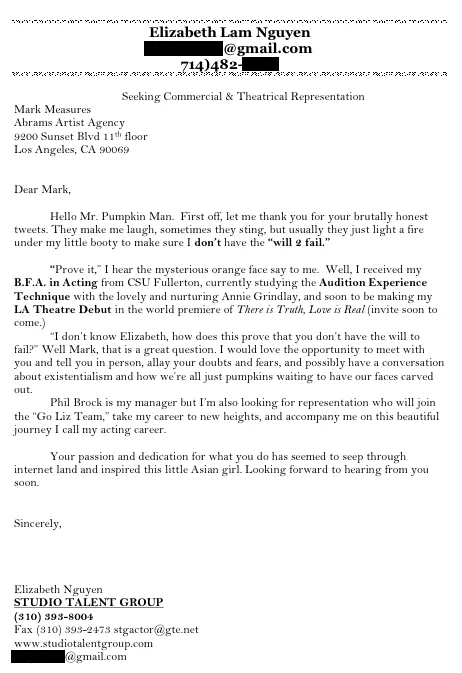
Personalizing your acting cover letter to the specific agency is a critical step that significantly increases your chances of getting noticed. Generic, mass-produced cover letters are easily spotted, signaling a lack of effort and disinterest. Begin by addressing the agent or agency by name, if possible. This shows that you’ve taken the time to research and identify the appropriate contact person. Research the agency’s roster of actors. Mention any actors whose careers inspire you or whose work resonates with you. Demonstrate that you understand the agency’s client base and the types of roles they typically represent. Tailor your letter to align with the agency’s specialization. If the agency focuses on film, emphasize your film credits; if they represent musical theater performers, highlight your singing and dancing skills. Customize your tone and language to match the agency’s brand. Use a professional, yet personable, tone that reflects their style. Demonstrate your understanding of their business, and highlight how your skills and experience align with their needs. Mention specific projects or roles that you are particularly well-suited for based on their current projects. Researching the agency’s recent successes, and mentioning them in your cover letter, shows that you are well-informed and that you’ve taken the time to understand their business. Tailoring your cover letter isn’t just about including the agency’s name. It’s about crafting a message that demonstrates that you’ve done your homework and that you genuinely want to work with them. It proves that you’re serious about your career.
Researching the Acting Agency
Before submitting your acting cover letter, it’s essential to conduct thorough research on the agency. This research informs how you tailor your letter and demonstrates your professionalism and commitment. Start by visiting the agency’s website. Review their roster of clients, focusing on actors whose careers you admire. This can also provide insight into the agency’s focus and values. Pay attention to the types of projects the agency represents, such as film, television, theater, or commercials. Understanding their specialization helps you align your cover letter with their needs. Read any press releases or news articles related to the agency. This will keep you informed about their recent successes, new clients, and future plans. If possible, check for reviews or testimonials about the agency. This can give you insight into their reputation and how they treat their clients. Social media platforms like LinkedIn, Instagram, and Twitter are also valuable resources. Follow the agency’s accounts to stay updated on their activities and to gain a better sense of their brand. Look for information about the agents themselves. Understanding their backgrounds, areas of expertise, and their personal approach can inform your cover letter and help you tailor your approach. Note their preferred method of contact, and follow those guidelines carefully. Finally, understanding their history and achievements will help you craft a cover letter that shows them why you will be a good fit for their agency.
Highlighting Your Uniqueness
In a highly competitive field like acting, highlighting your uniqueness is one of the most crucial elements of your cover letter. Agents are constantly searching for talent that stands out from the crowd. Start by identifying your unique selling points (USPs). What makes you different from other actors? This might include specific physical attributes, such as a distinctive voice or a particular look. It could also be special skills, such as fluency in a foreign language, proficiency in a specific sport, or unique experience, such as military service or a background in a related field like dance or music. Showcase your personality. Let your passion shine through. Inject your personality into your writing, showcasing your enthusiasm for acting and your commitment to the craft. Use anecdotes or short stories to illustrate your unique skills or experiences. For example, if you’re bilingual, tell a brief story about how this skill helped you secure a role. Mention any awards, accolades, or recognition you have received for your acting. These achievements validate your talent and can give you an edge. Demonstrate that you are a well-rounded individual. Mentioning hobbies, interests, or community involvement can help you to connect with the agent on a personal level. Ultimately, it is about showing the agent that you are not just another actor but a unique individual with something special to offer. Your goal is to leave a lasting impression that makes the agent want to meet you and learn more about you.
The Importance of a Professional Tone

Maintaining a professional tone in your acting cover letter is essential for creating a positive first impression and demonstrating your seriousness about your career. Avoid slang, colloquialisms, or overly casual language. While it is important to let your personality shine, it is equally important to present yourself in a polished and respectful manner. Use clear, concise language. Avoid jargon or overly complex sentences. Your writing should be easy to read and understand. Make sure that your cover letter is free of grammatical errors and typos. Proofread it carefully, or ask someone else to review it. Pay attention to your word choice and sentence structure. Maintain a formal, yet friendly, tone. While you want to present yourself as approachable, avoid being overly familiar or informal. Maintain a positive and confident tone throughout your letter. Avoid negative statements or self-deprecating remarks. Showcase your understanding of industry standards and practices. Address the agent professionally, and adhere to the agency’s preferred method of communication. Show respect for their time and expertise. In addition to the content and language, pay attention to the overall presentation of your cover letter. Ensure that the formatting is clean, organized, and easy to read. Use professional fonts and maintain consistent margins. Demonstrate your commitment to professionalism through every aspect of your cover letter. Your goal is to show that you are a serious actor who understands the value of professionalism and is prepared to make a positive impression.
Formatting and Presentation of Your Cover Letter
The formatting and presentation of your acting cover letter are just as important as the content. A well-formatted letter demonstrates professionalism and attention to detail. Choose a professional-looking font, such as Times New Roman, Arial, or Calibri. Avoid using overly decorative fonts, as they can detract from the readability of your letter. Maintain a standard font size, usually between 10 and 12 points. Use consistent margins, typically one inch on all sides. This will ensure that your letter looks neat and organized. Ensure that there is adequate spacing between paragraphs. Use single spacing within paragraphs and double spacing between paragraphs to improve readability. Include your name, address, phone number, and email address at the top of your letter. Place the date below your contact information. Address the agency with a formal salutation. If you know the agent’s name, use it. Otherwise, use a general salutation like “Dear Hiring Manager.” Make sure that your letter is well-organized and easy to read. Use clear headings and subheadings to separate different sections of your letter. Keep your paragraphs concise and to the point. Before submitting your cover letter, proofread it carefully to ensure that it is free of errors. Check for grammatical errors, typos, and formatting inconsistencies. Consider having someone else review your letter for a second opinion. If you are sending your cover letter electronically, save it as a PDF file to maintain the formatting. A well-formatted and presented cover letter shows that you care about the details.
Common Mistakes to Avoid in an Acting Cover Letter
Several common mistakes can undermine your acting cover letter and diminish your chances of securing representation. Avoid using a generic, mass-produced letter. Tailor your letter to the specific agency, demonstrating that you’ve researched them. Overly long cover letters are a major turnoff. Keep it concise and focus on the most important information. Avoid boasting or exaggerating your accomplishments. Agents can spot insincerity easily. Instead, be specific, and provide concrete examples. Ensure that your cover letter is free of typos, grammatical errors, and formatting inconsistencies. These errors can create a poor impression and damage your credibility. Never use negative language or criticize other actors or productions. Maintain a positive, professional tone throughout your letter. Don’t include irrelevant information, such as personal details or information that is unrelated to your acting career. Avoid being overly casual or informal in your writing. Agents want to see professionalism, so maintain a respectful and polished tone. Avoid simply restating your resume. Your cover letter should offer additional context and highlight unique aspects of your experience and personality. Make sure to follow the agency’s submission guidelines. Pay attention to their preferred method of contact, and formatting requirements. When you avoid these common pitfalls, you can create a more effective cover letter that will increase your chances of getting noticed and securing the representation you desire. By focusing on these essential aspects, you can greatly improve your chances of making a strong first impression.
Proofreading and Editing Your Cover Letter

Proofreading and editing are crucial steps in the cover letter writing process. They will help ensure that your letter is polished, professional, and free of errors. Begin by reading through your cover letter several times, focusing on different aspects each time. First, check for typos, grammatical errors, and punctuation mistakes. Next, review the content for clarity, conciseness, and coherence. Make sure that your sentences flow logically and that your ideas are well-organized. Review your word choice, ensuring that you’re using strong, precise language. Eliminate any unnecessary words or phrases. Consider having someone else review your cover letter. A fresh pair of eyes can often catch errors that you may have missed. Ask a friend, family member, or a career counselor to read your letter and provide feedback. After receiving feedback, revise your cover letter accordingly. Make the necessary changes to improve the clarity, accuracy, and overall effectiveness of your letter. Ensure that the formatting of your cover letter is consistent and professional. Pay close attention to font styles, sizes, margins, and spacing. Proofread your letter one last time after making any revisions. This final check will help you catch any new errors that may have been introduced during the editing process. Carefully proofread and edit your cover letter before you submit it. A well-written and error-free cover letter will show the agency that you pay attention to detail and that you take your acting career seriously.
Following Up After Submitting Your Cover Letter
Following up after submitting your acting cover letter is a crucial step. It shows that you’re proactive and interested in the opportunity. The timing of your follow-up is essential. Wait for the appropriate amount of time after submitting your application. Most career experts suggest waiting one to two weeks before following up. Following up too soon might appear presumptuous, while waiting too long might allow your application to be forgotten. Determine the best way to follow up. If the agency specified a preferred method of contact, such as email or phone, follow their instructions. If not, you can send a brief, polite email or call. When you follow up, reference the position you applied for, or the agency you contacted. Keep your communication brief and professional. Express your continued interest in the opportunity. If you have any new developments to share, such as a recent audition or a new project, briefly mention them. Avoid being overly persistent or demanding. Express your gratitude for the agency’s time and consideration. If you don’t hear back after your initial follow-up, it’s acceptable to send a second follow-up email or make another phone call, but avoid bombarding the agency with multiple contacts. When you are following up, stay professional and courteous. Even if you don’t receive a response, maintaining a positive and respectful attitude will reflect well on you and demonstrate your professionalism. Your goal is to create a favorable impression and to increase your chances of being remembered.
Tips for Following Up with the Agency
When you are following up with an acting agency, there are specific strategies and approaches that can increase your chances of a positive response. When you follow up, mention the specific role or opportunity you applied for. This will help the agent quickly identify your application and place it in the right context. Briefly reiterate your interest and enthusiasm for the opportunity. Explain why you believe you would be a good fit for their agency. Briefly mention any updates to your resume, such as recent roles, training, or projects. If you have a new headshot or showreel, you can provide a link or attachment. Show respect for their time. Keep your communication concise and to the point. Avoid making excessive requests or demanding immediate feedback. Maintain a positive and professional tone throughout your communication. Avoid being overly casual or informal. Thank the agent for their time and consideration. This shows that you appreciate the opportunity. Even if you haven’t heard back, you should still express your gratitude. If you have not received a response after your first follow-up, wait for a reasonable amount of time before following up again. Avoid sending multiple emails or calls. Be patient, and understand that agents receive a large volume of applications. Your goal is to demonstrate professionalism and your ongoing interest, and that you are a serious contender for representation. If you do not receive a response, respect their decision and keep applying for other opportunities.
Cover Letter Examples and Templates for Actors

Utilizing cover letter examples and templates can provide valuable guidance and structure. Look for examples from reputable sources. You can find them online through career websites. When reviewing examples, customize the template to reflect your unique experience, skills, and the specific requirements of the agency. Pay close attention to the structure, formatting, and language used in the examples. These can serve as a model for your own cover letter. Ensure that the examples you use are up-to-date and relevant to the current industry standards. Adapt the examples to showcase your individual personality and experiences. Modify the language, tone, and content to accurately reflect your qualifications. Tailor the examples to each agency you apply to, by including specific details, skills, and achievements that are relevant to their business. Don’t just copy and paste. Adapt the examples and the templates. Ensure that your cover letter is unique, and it highlights what you can bring to the agency. After customizing your cover letter, proofread it carefully to ensure it’s free of errors. Have someone else review your cover letter to provide feedback and catch any mistakes. By using examples and templates as a guide, you can create a compelling cover letter that effectively showcases your talents, and increases your chances of securing representation. Keep in mind, that these examples and templates are just a starting point, and they should be adapted to suit your individual needs.