What is an Academic Cover Letter?
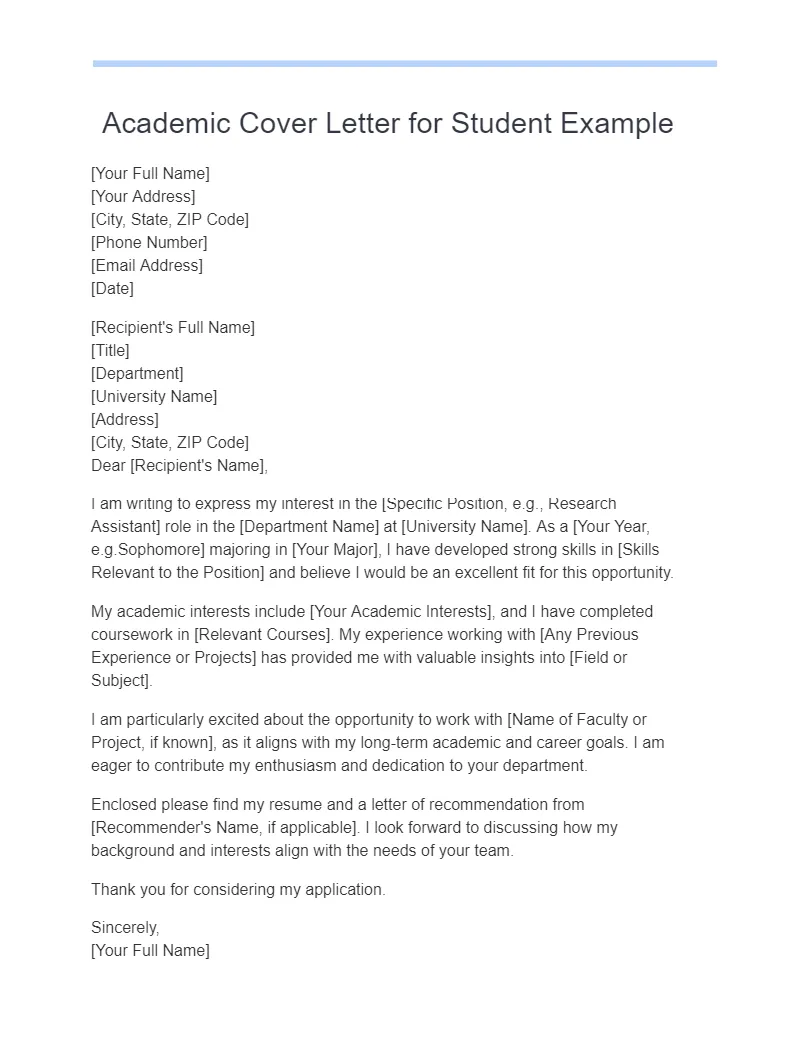
An academic cover letter is a crucial document when applying for faculty positions, postdoctoral roles, or other academic jobs. It serves as your introduction to the hiring committee, providing a concise overview of your qualifications, research interests, experience, and why you are a good fit for the specific position and institution. Unlike a general cover letter, an academic cover letter is highly tailored to the specific requirements and expectations of the academic world. This document is your opportunity to showcase your scholarly achievements, teaching experience, and potential contributions to the department. The primary goal of this letter is to persuade the reader that your skills, experience, and research align with the needs of the institution and the specific job opening. A well-crafted letter can significantly increase your chances of getting an interview.
Key Differences Between Academic and Professional Cover Letters
While both academic and professional cover letters aim to introduce you to a potential employer, they have distinct focuses and tones. Professional cover letters often emphasize practical skills, industry experience, and how you can contribute to a company’s bottom line. The language used is typically more direct and business-oriented. Academic cover letters, on the other hand, prioritize your research, teaching experience, scholarly achievements, and your potential contributions to the field and the institution’s academic environment. They demonstrate your understanding of the research landscape and your alignment with the institution’s values and goals. Moreover, academic letters often require detailed descriptions of research interests, methodologies, and publications. The emphasis is on intellectual contributions, scholarly expertise, and your potential to advance the academic field. It is imperative to understand these differences to ensure your cover letter is tailored for the target audience.
Essential Components of an Academic Cover Letter

A compelling academic cover letter includes several key components that should be meticulously crafted. Each section serves a specific purpose in highlighting your qualifications and suitability for the position. Carefully structuring your letter ensures a clear and persuasive presentation of your candidacy. By addressing each element effectively, you demonstrate your understanding of the application process and your commitment to the role.
Contact Information and Date
Begin with your contact information (name, address, phone number, email) and the date. Make sure your contact information is professional and current. This allows the reader to quickly identify you and have your contact information at hand.
The Salutation
Address the hiring committee or the specific person named in the job posting. If no name is provided, use a formal salutation such as “Dear Search Committee” or “Dear Hiring Committee.” Avoid generic greetings like “To Whom It May Concern.” Researching the department to find the hiring manager’s name can personalize your letter and make a stronger impression.
Body Paragraph 1: Introduction & Your Research

Start by clearly stating the position you are applying for and where you found the advertisement. Provide a brief overview of your research interests and how they align with the department’s needs. This paragraph should quickly capture the reader’s attention and highlight your most relevant qualifications. Mention your academic background and any key achievements that make you a strong candidate. This sets the stage for the rest of your letter and gives the reader a compelling reason to continue reading. This section is very important, so ensure it is crafted in a way that immediately grabs attention.
Highlighting Your Research Interests
Elaborate on your research interests, methodologies, and significant findings. Describe your research in a way that is accessible to a broad academic audience, avoiding jargon. Emphasize how your research contributes to the field and its potential impact. Explain how your work aligns with the department’s current research focus and strategic goals. Highlighting specific projects, publications, and presentations can reinforce your research expertise and your ability to contribute to the department’s research environment. This section should showcase your intellectual contributions.
Body Paragraph 2: Your Relevant Experience
Detail your teaching experience, including the courses you have taught, the level of students, and your teaching philosophy. If the position involves research, discuss your experience in grants, publications, and presentations. Provide specific examples of your teaching effectiveness, such as positive student feedback or innovative teaching methods. Mention your experience in supervising students or mentoring. This demonstrates your overall contribution to the university. If your role requires it, showcase your ability to manage teaching responsibilities effectively, supporting student learning, and contributing to the academic mission of the institution.
Showcasing Teaching Experience (If Applicable)

Provide specific details about the courses you’ve taught, including course names, levels (undergraduate, graduate), and the key skills you emphasized. Highlight your teaching methodology, whether it’s interactive lectures, hands-on projects, or online instruction. Include any innovative teaching methods you’ve used, such as incorporating technology or promoting active learning. Mention any positive student feedback, teaching awards, or evaluations that demonstrate your effectiveness. The focus here is to show your commitment to student success and your ability to create a stimulating learning environment.
Highlighting Publications and Presentations
List your significant publications, including peer-reviewed journal articles, book chapters, and conference proceedings. Prioritize publications that align with the department’s research interests. Include the citation information for each publication (authors, title, journal or conference, year, volume, and page numbers). Briefly summarize your publications’ main arguments and their contribution to the field. Highlight any presentations you’ve given at conferences or seminars, and the impact of your work. This section directly demonstrates your academic achievements and research expertise, showcasing the value you bring to the position.
Body Paragraph 3: Why This Institution
Explain why you are interested in this specific position and institution. Mention specific faculty members whose research aligns with yours, and how you see yourself collaborating with them. Discuss how your research and teaching interests contribute to the department’s goals. Show that you have researched the institution and understand its values and mission. Demonstrate how you envision yourself contributing to the institution’s academic environment. This part is all about demonstrating you are not just applying to any job, but the right job for you.
Tailoring to the Specific Job Requirements

Carefully review the job description and highlight how your skills, experience, and qualifications match the requirements. Provide specific examples of how you have demonstrated the required skills in your previous roles or research. Emphasize any experiences or skills mentioned in the job description. Addressing these requirements directly shows that you’ve read the job description carefully and can fulfill the specific duties. Tailoring the letter demonstrates your commitment to the role and your understanding of the position’s needs, making your application stand out.
Demonstrating Alignment with the Department
Show how your research and teaching interests align with the department’s mission, values, and strategic goals. Mention any faculty members whose research aligns with yours, and express your interest in collaborating with them. Discuss how your work would complement existing programs or initiatives within the department. By demonstrating your awareness of the department’s environment and your ability to contribute, you make a compelling case that you will be a valuable addition.
The Closing Paragraph: Expression of Enthusiasm
Reiterate your interest in the position and the institution. Express your enthusiasm for the opportunity and reiterate your fit for the role. Mention your availability for an interview and your willingness to provide additional materials. Thank the search committee for their time and consideration. This paragraph should leave a positive and lasting impression, reinforcing your genuine interest and confidence in your candidacy.
The Closing and Signature

Use a professional closing such as “Sincerely” or “Best regards.” Type your full name below the closing. If submitting a hard copy, leave space for your signature above your typed name. If submitting an electronic copy, you may use a digital signature or simply type your name. Make sure that the tone and closing are consistent with the professional standard.
Formatting and Design Tips for Academic Cover Letters
The formatting and design of your academic cover letter are as important as the content. A well-formatted letter is easy to read and presents you in a professional light. Proper formatting makes a positive first impression and enhances the readability of your content. Follow these guidelines to ensure your letter is visually appealing and easy to navigate.
Font Choices and Readability
Use a standard, readable font such as Times New Roman, Arial, or Calibri. Choose a font size between 11 and 12 points to ensure the text is easy to read. Maintain consistent font choices throughout the entire letter. Use clear headings, subheadings, and bullet points to organize your information and make it scannable. Proper font choice and readability improves the overall presentation of your application.
Proofreading and Editing

Proofread your cover letter multiple times for any grammatical errors, spelling mistakes, and typos. Have a colleague, mentor, or career advisor review your letter for feedback. Ensure your language is concise, clear, and professional. Pay attention to the tone and style of your writing, making sure it matches the academic context. Errors can diminish your credibility and can make you appear unprofessional. Thorough proofreading and editing demonstrates your attention to detail and commitment to quality.
Mistakes to Avoid in Your Academic Cover Letter
Certain mistakes can immediately disqualify your application. Being aware of these common pitfalls helps you create a more effective cover letter. Avoiding these errors demonstrates your understanding of the academic job application process and can significantly increase your chances of success.
Generic Content and Lack of Personalization
Avoid using a generic cover letter that is not tailored to the specific position or institution. Customize your letter to each job application by highlighting your relevant experience and research interests. Show that you understand the specific needs of the department and how you can contribute to their goals. Generic content often lacks depth and fails to resonate with the hiring committee. Your cover letter should convince the reader that you have read the job posting and are genuinely interested in the role.
Ignoring the Specific Job Requirements

Carefully review the job description and address the required qualifications, skills, and experiences. Demonstrate how your qualifications align with the requirements listed in the job posting. Failing to address these specific requirements is a major oversight. Failing to align your skills with the job requirements makes it seem like you are not a suitable fit for the role.
Poor Formatting and Typos
Ensure your cover letter is well-formatted, easy to read, and free of errors. Use a professional font, proper spacing, and clear headings and subheadings. Proofread your letter multiple times to catch any spelling mistakes or grammatical errors. Poor formatting and typos detract from your credibility and can create a negative impression of your attention to detail. Poor formatting and typos make you seem less professional and can undermine the impact of your qualifications.
Final Checklist for Reviewing Your Academic Cover Letter
Before submitting your academic cover letter, use a final checklist to ensure you haven’t missed any important details. This final review will help you catch any errors and ensure your application is as strong as possible. Here’s what to do:
- Verify that all contact information is accurate.
- Confirm that the letter is addressed to the correct person or committee.
- Check that the letter addresses the specific requirements of the job description.
- Ensure your research interests and experience align with the department’s needs.
- Proofread for any spelling, grammar, or formatting errors.
- Ask a colleague, mentor, or career advisor to review your letter.
- Confirm that the tone and style are appropriate for an academic context.